Last updated November 2, 2026
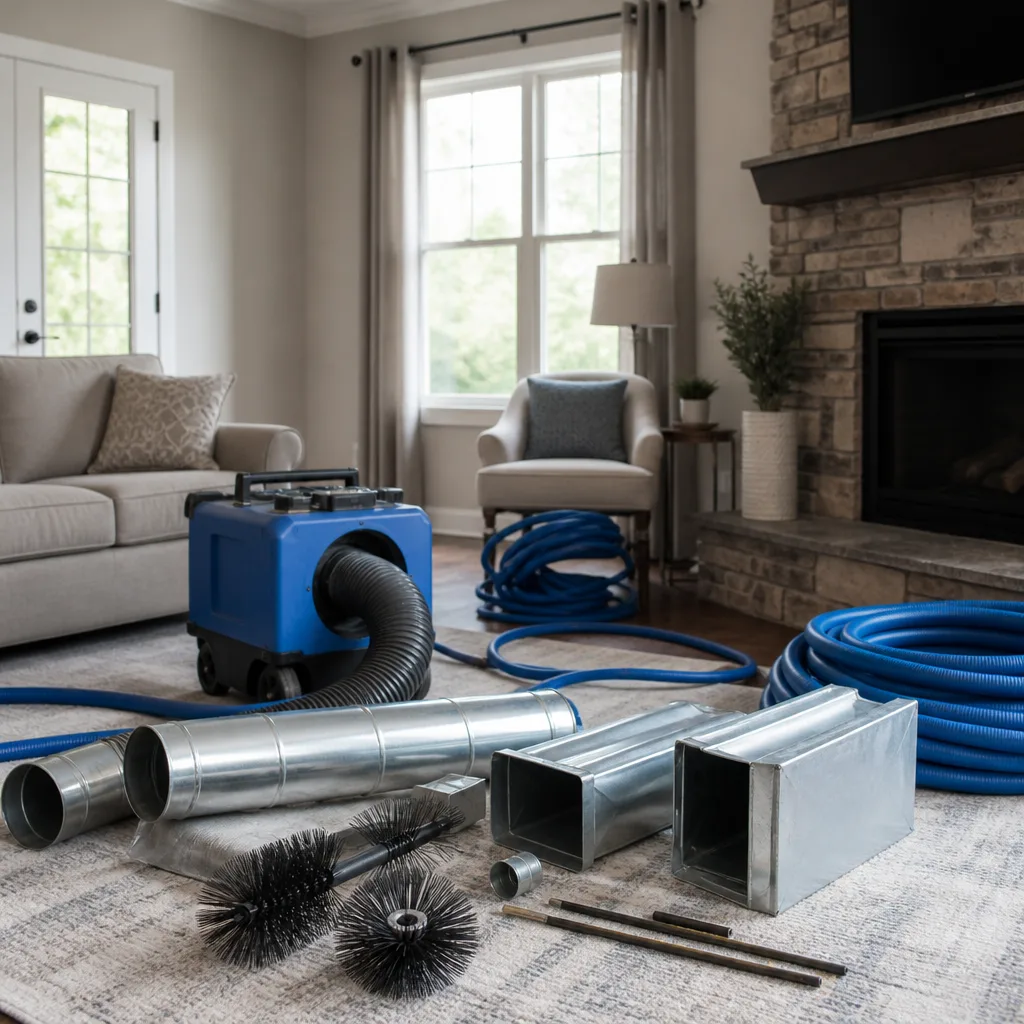 Whole-home duct cleaning
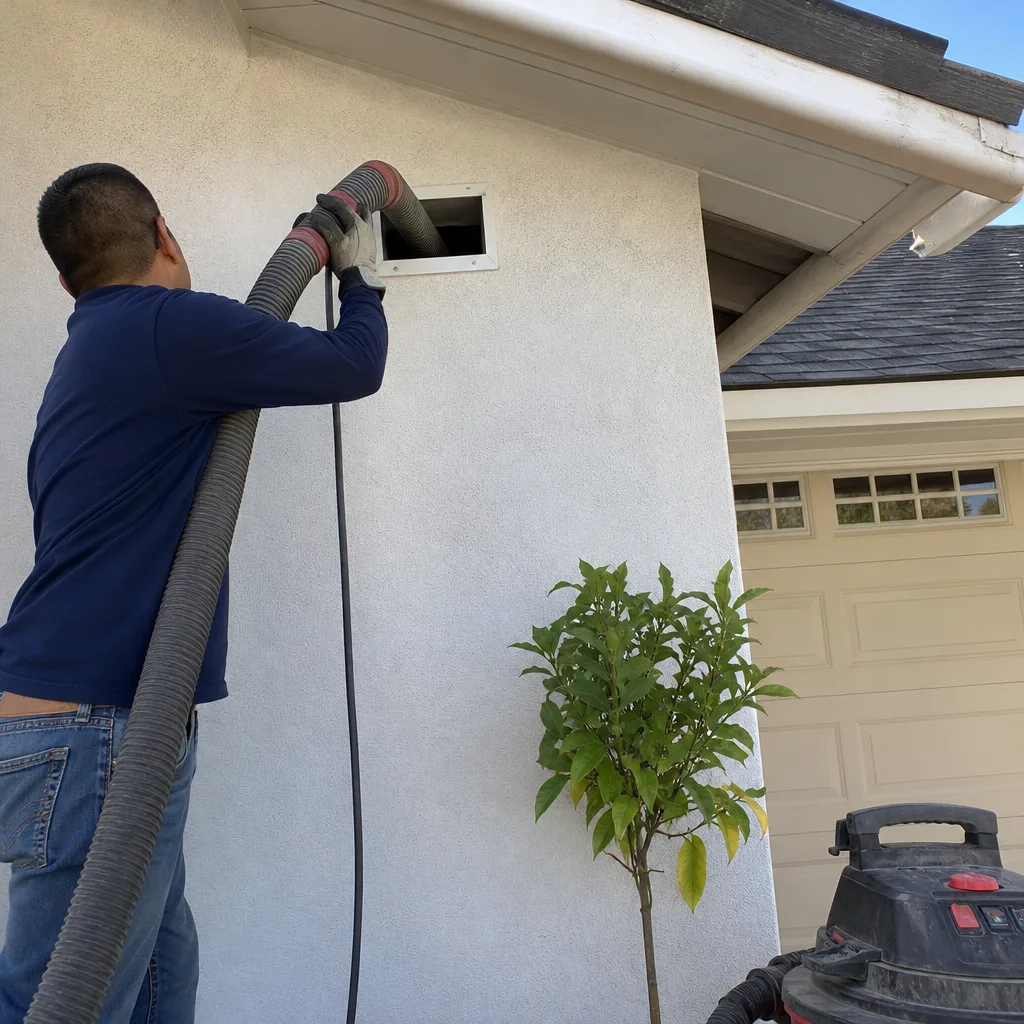
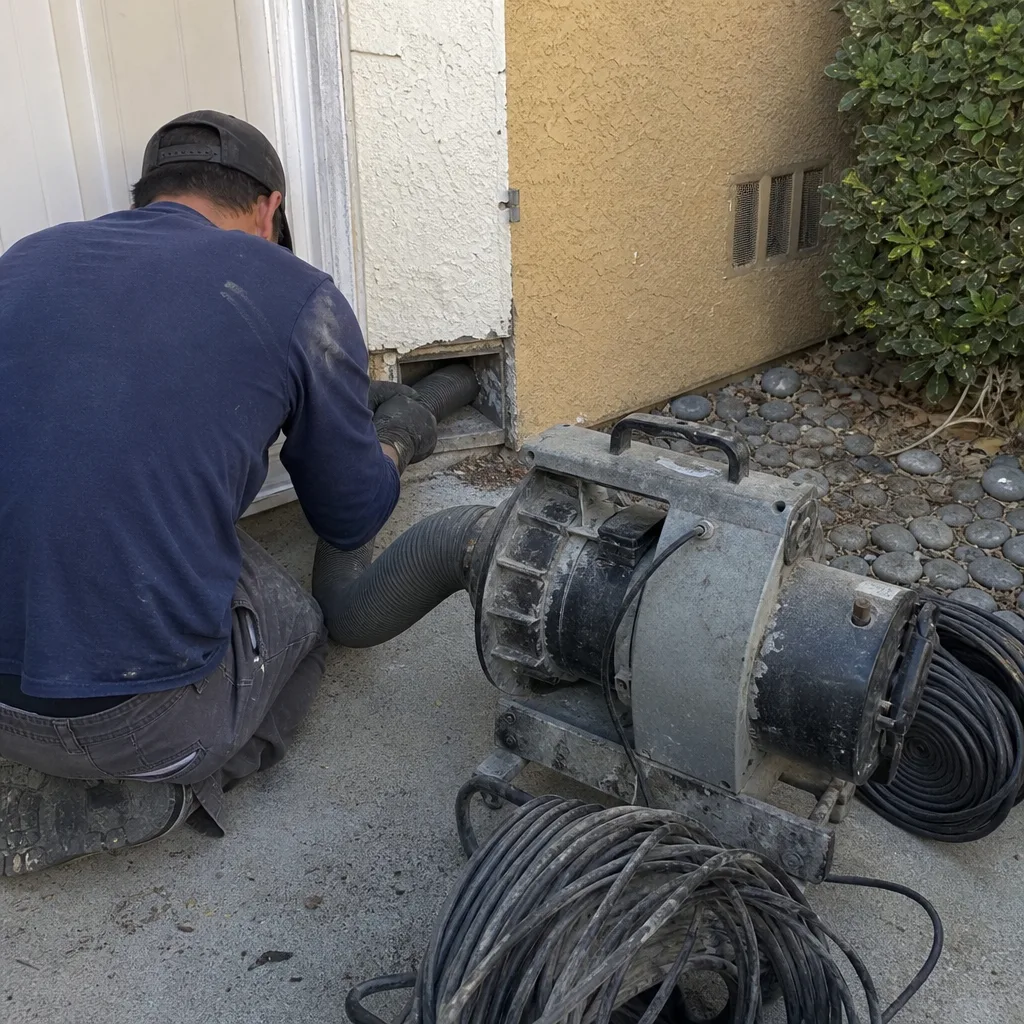
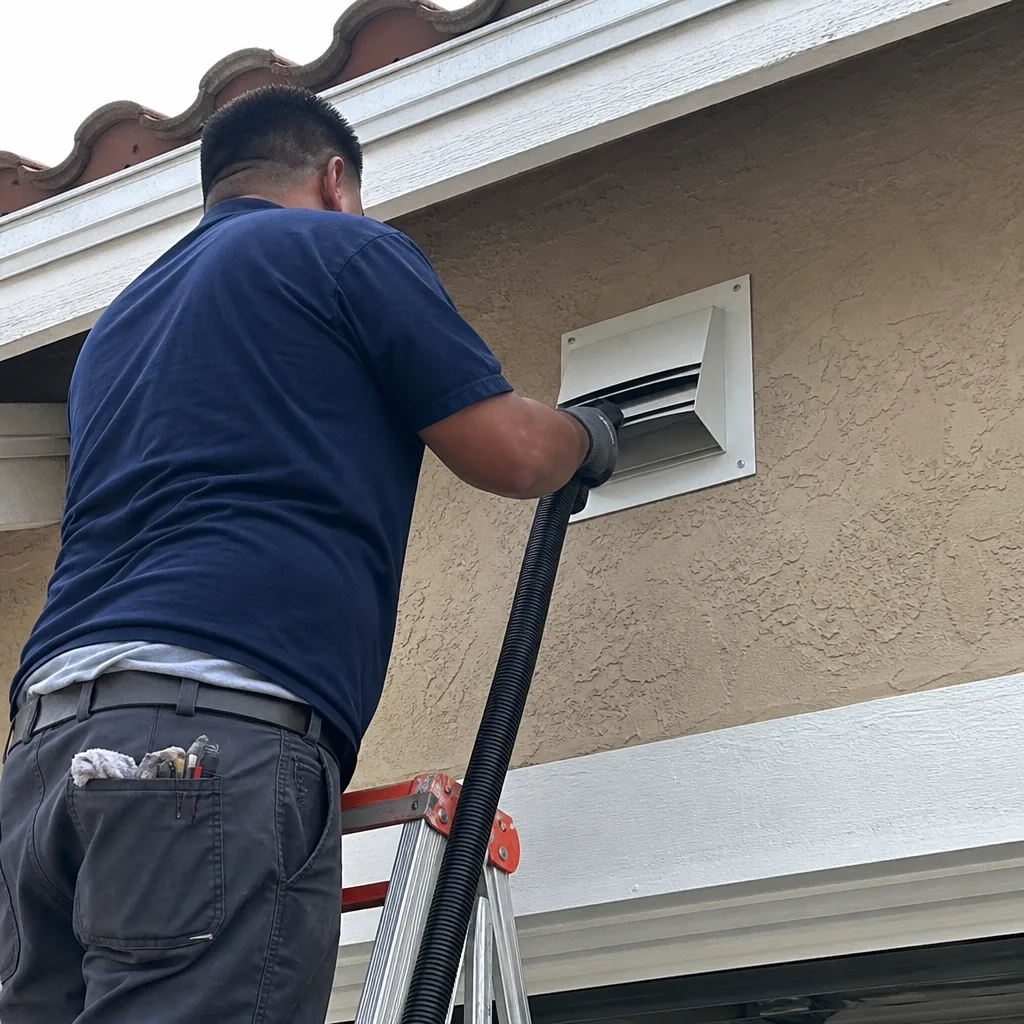
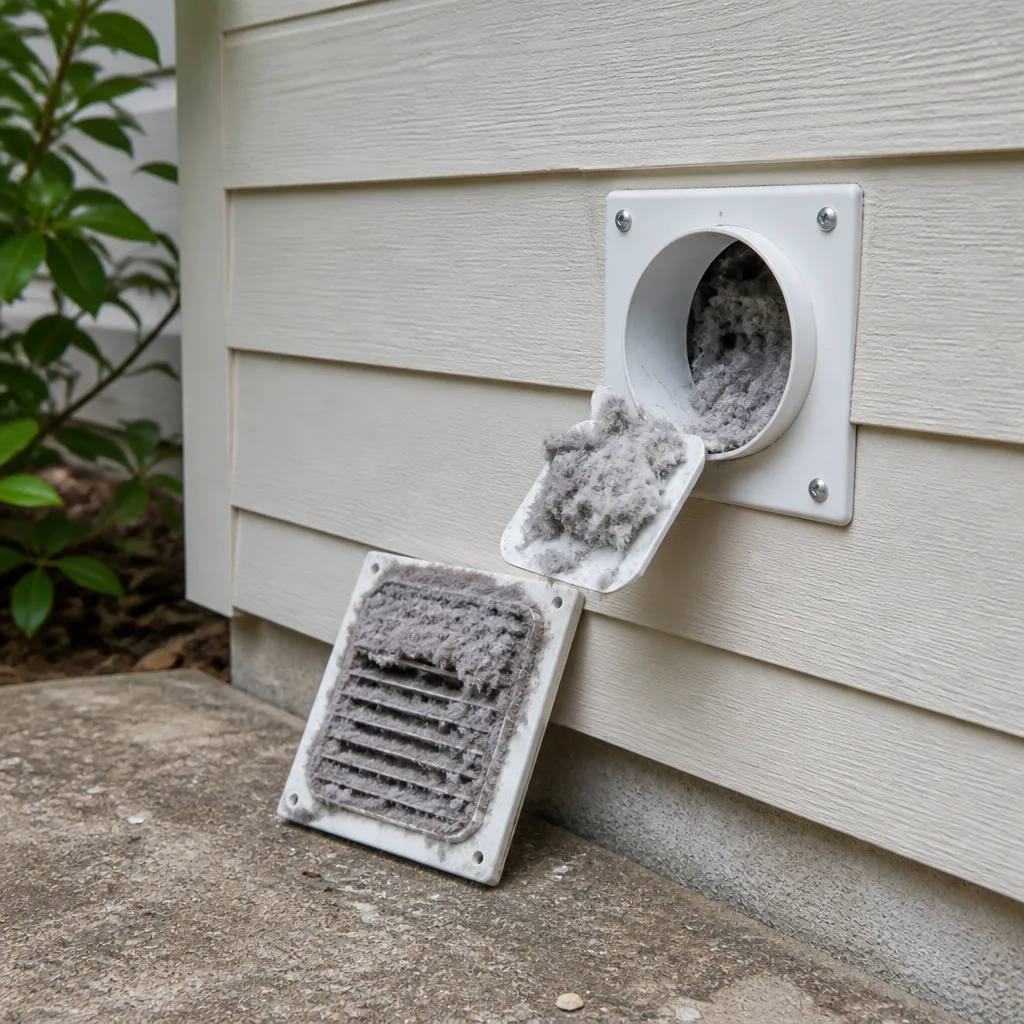 Dryer vent cleaning
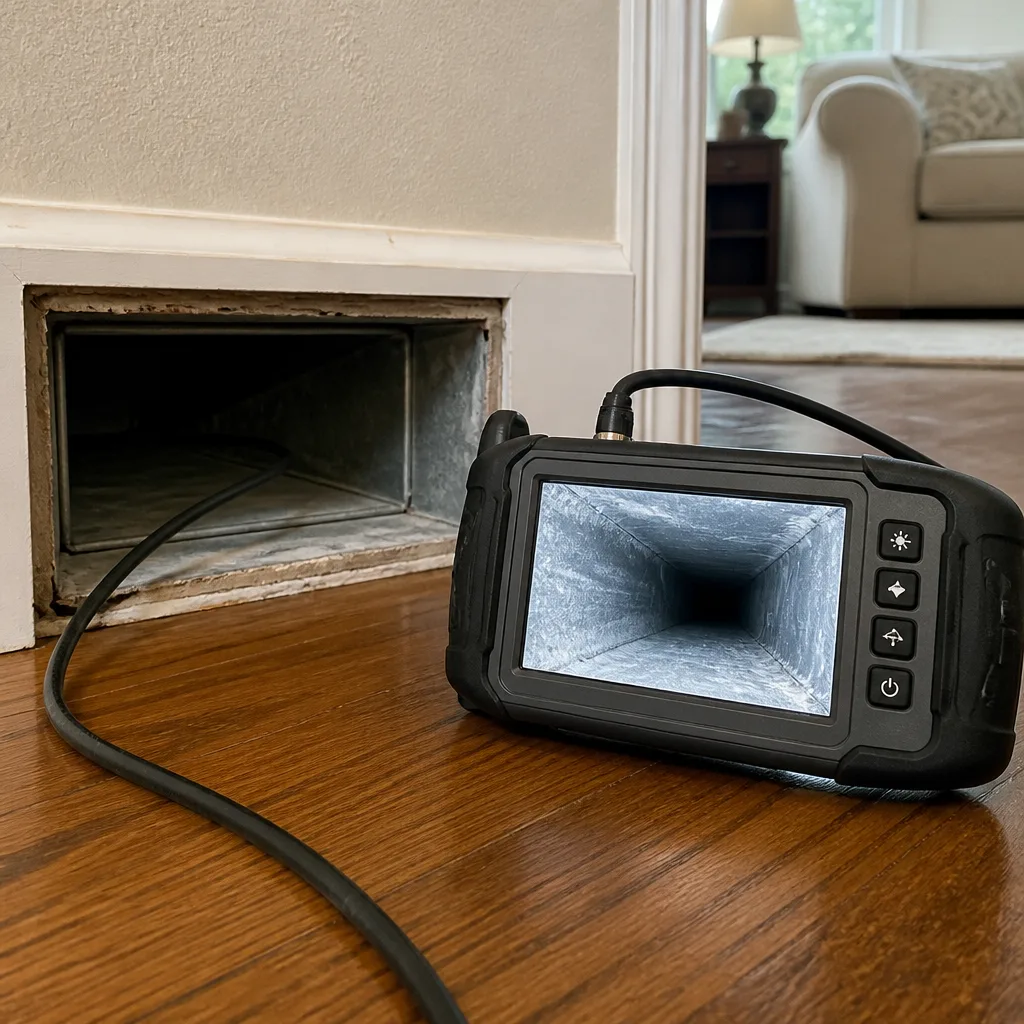 Camera inspection
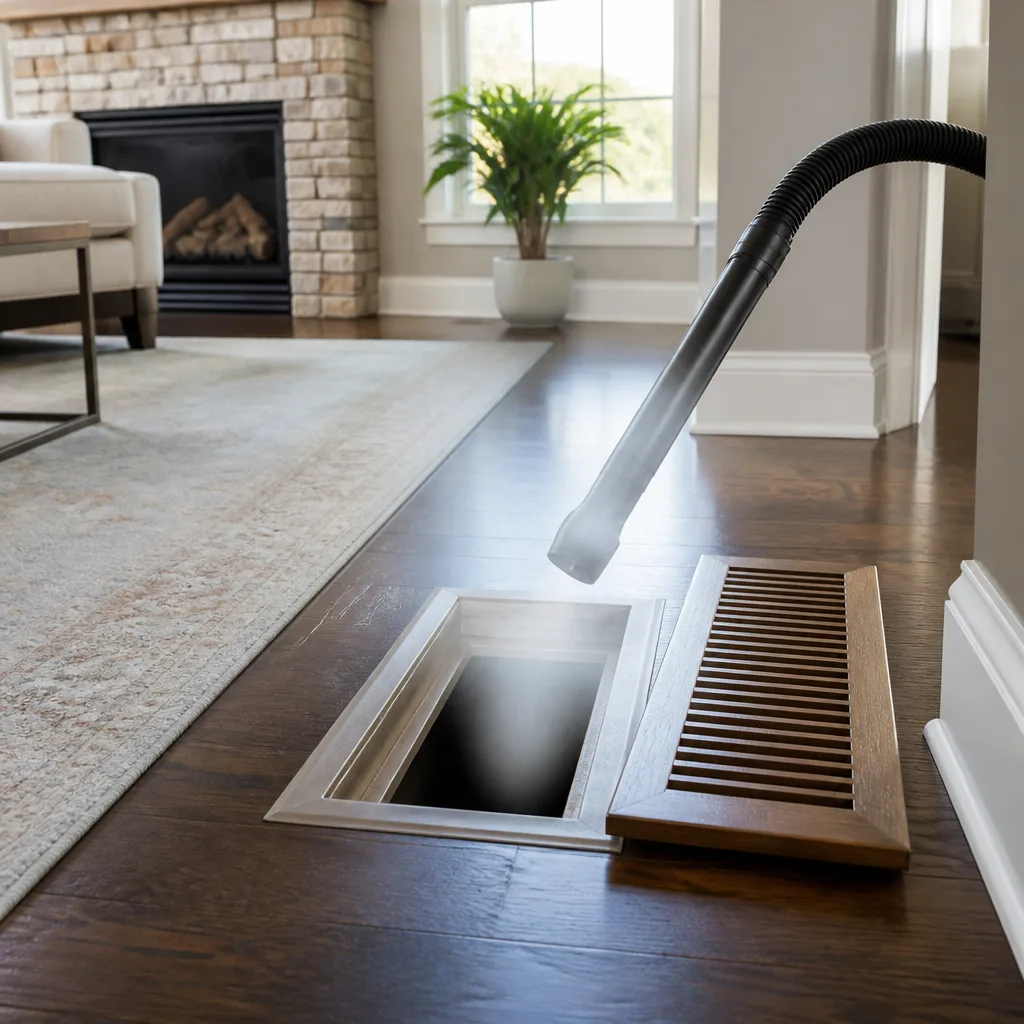 Sanitizing & deodorizing
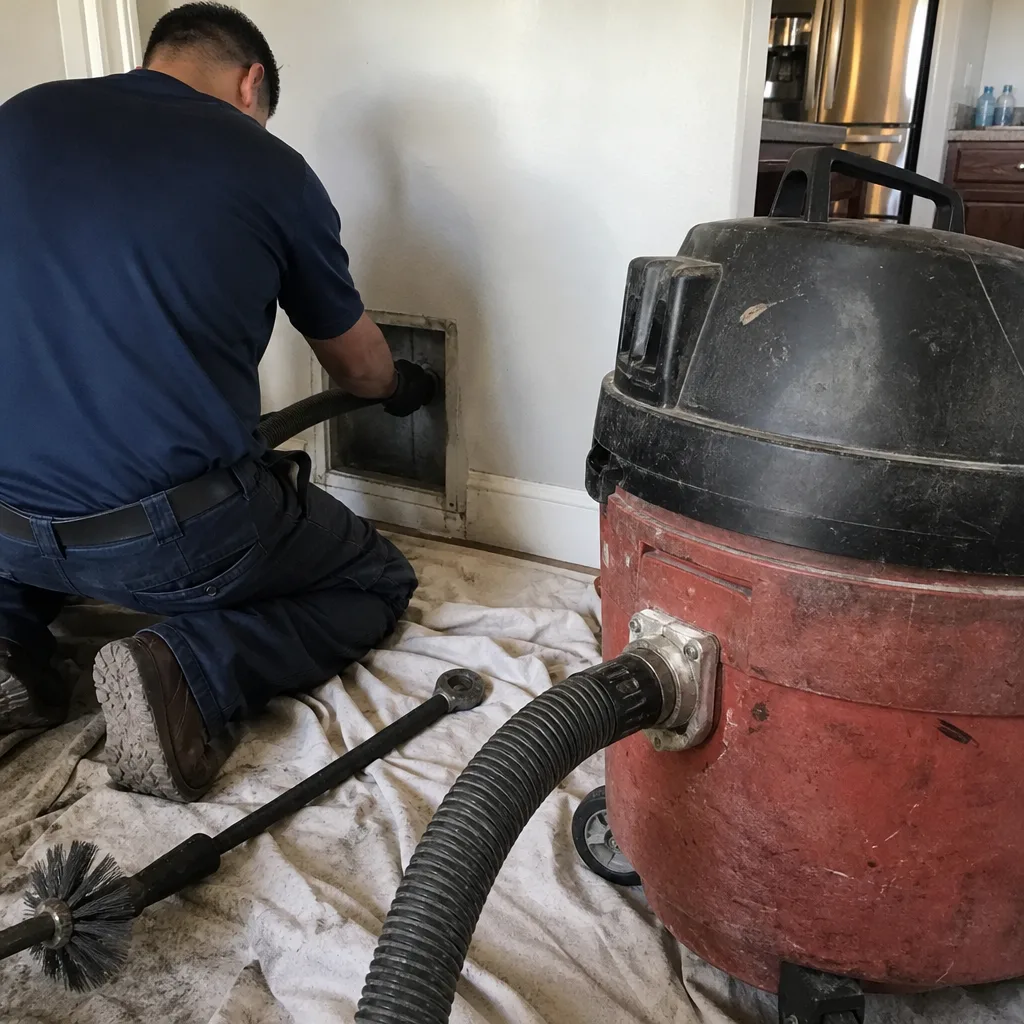
Whole-system duct and dryer vent check with before-and-after photos - you see exactly what came out of your vents
That "$99 whole-house special" is a bait ad - the real number appears once they are in your hallway, or the "clean" is a shop-vac at the register. We photograph the inside of your ducts before and after instead.
Air Duct Cleaning Emergency Preparedness Guide for Mira Mesa Homes
During the 2007 Witch Creek Fire, air quality across inland San Diego deteriorated to hazardous levels for days. Homes in Mira Mesa sat in the smoke plume, and the ones with compromised duct systems had a problem nobody was talking about: even with HVAC systems switched off, fine particulate from outside was pulled through disconnected attic duct runs and distributed into living spaces. Your duct system is either a filter or a pathway during a smoke event. This guide covers what Mira Mesa homeowners need to know before, during, and after an air quality emergency, and how your duct condition determines which role your home plays.
Styles & brands we work with
- Whole-home duct cleaning
- Dryer vent cleaning
- Camera inspection
- Sanitizing & deodorizing
Quick Answer
Air duct cleaning emergency preparedness for Mira Mesa homes means having a clean, sealed duct system with a MERV 13 filter installed before fire season, knowing when to shut your HVAC down during a smoke event, and conducting a proper post-event duct assessment. Homes with dirty or disconnected ductwork recirculate smoke particulates internally and can hold contamination long after outdoor air clears. The most overlooked factor is attic duct integrity: leaking flex duct draws contaminated air in even when the system is off.
Table of Contents
- Why Mira Mesa Homes Face a Specific Risk Profile
- Pre-Event Preparation: Establishing Your Duct and Filter Baseline
- During-Event HVAC Protocol: When to Run, When to Shut Down
- Attic Duct Integrity: The Fire-Season Variable Most Homes Fail
- Post-Event Assessment: Evaluating Contamination Load
- What a Post-Disaster Duct Cleaning Scope Includes
- Documentation and Insurance: What You Need on Record
- Common Mistakes to Avoid
- When to Call a Professional
- Frequently Asked Questions
- The Bottom Line
Why Mira Mesa Homes Face a Specific Risk Profile
Mira Mesa sits in a geography that makes it structurally vulnerable to wildfire smoke. The community is positioned east of Interstate 805, directly in the path of prevailing wind patterns that carry smoke from backcountry fires toward the coast. The 2007 Witch Creek Fire and the 2003 Cedar Fire both pushed unhealthy air into Mira Mesa for extended periods, and Cal Fire’s own historical data shows this corridor repeatedly experiences elevated AQI levels during fire season.
But the smoke itself is only part of the issue. The average Mira Mesa home was built between the 1970s and 1990s, which means most residential duct systems in this area are now 30 to 50 years old. Flex duct from that era was rarely sealed correctly at the connections, and decades of thermal cycling in uninsulated attics that routinely hit 130 degrees in August have caused widespread disconnection and deterioration. Our Air Duct Cleaning Mira Mesa home guide covers the regional specifics in detail, but the short version is this: Mira Mesa’s housing stock has an above-average incidence of attic duct leakage, and that leakage is precisely what converts an outdoor smoke event into an indoor air quality crisis.
Homes in the neighborhoods east of Camino Ruiz and north of Mira Mesa Boulevard are particularly exposed. These areas have larger lot sizes with mature vegetation that accumulates dry fuel, and homes there sit closer to the undeveloped canyons that act as fire corridors. When Santa Ana winds push smoke westward, these neighborhoods are first in line. Homeowners in the newer developments near Los Peñasquitos Canyon face a different vector: canyon fire risk that can generate smoke plumes with minimal advance warning.
The takeaway is not that Mira Mesa homeowners should panic. It’s that the risk is real, it’s recurring, and it’s addressable with preparation. Your duct system is the variable you control.
Pre-Event Preparation: Establishing Your Duct and Filter Baseline
You cannot improvise duct preparedness when you can already smell smoke. The pre-event phase is where the actual work happens, and it comes down to three things: cleaning, sealing, and filtering.
Step 1: Get a True Duct Cleaning Before Fire Season
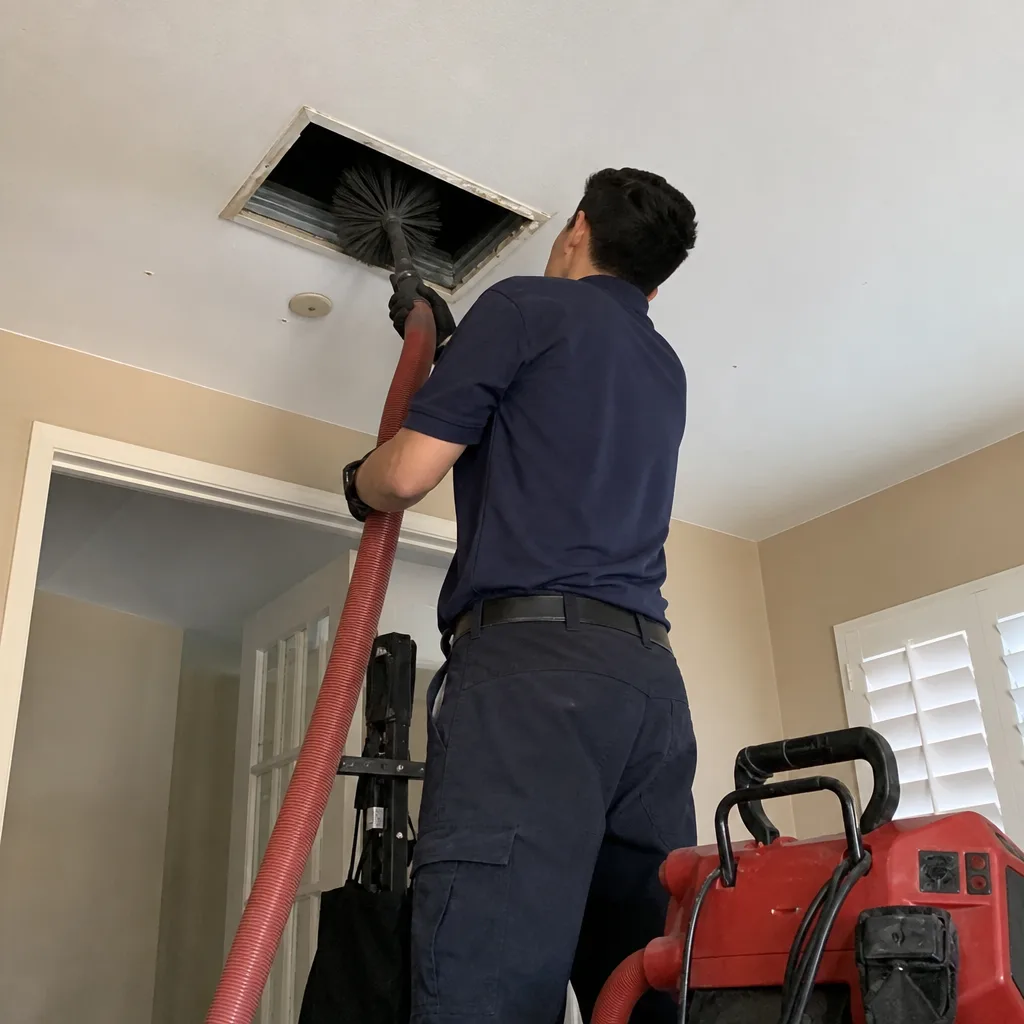
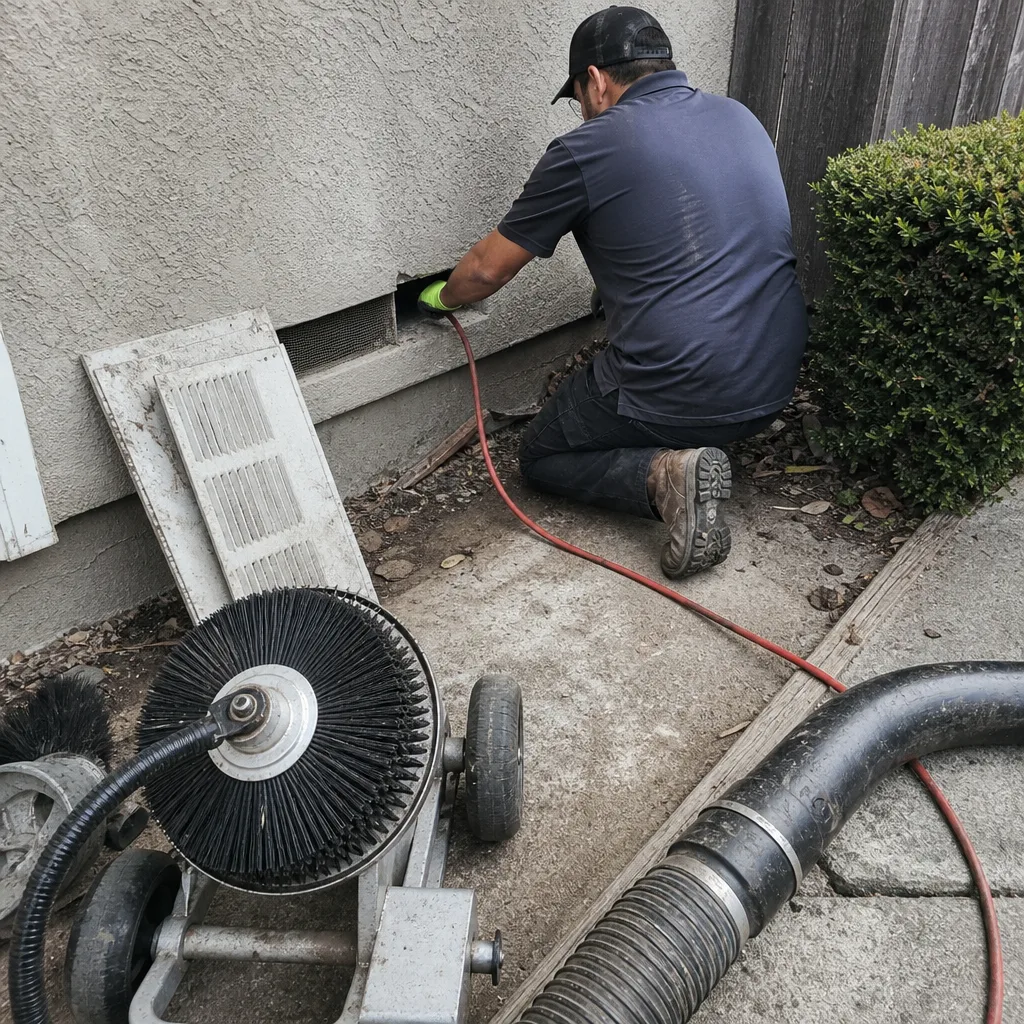
A routine duct cleaning removes the accumulated dust, pet dander, and debris that would otherwise bond with smoke particulates during an event. Clean ducts mean smoke has less material to adhere to, and post-event cleaning is far more effective when you’re not working through years of pre-existing buildup. We run Air Duct Cleaning in Mira Mesa with brush-and-vacuum extraction using Rotobrush and Nikro systems, the same category of equipment used by commercial remediation contractors. What matters for emergency preparedness is that the extraction is thorough: surface dusting with a shop vac does nothing for the particulate load trapped in the duct lining.
Step 2: Seal the Duct Runs
Duct sealing is not a luxury upgrade in Mira Mesa. It’s the difference between a system that stays clean during a smoke event and one that actively ingests contaminated attic air. Disconnected or unsealed flex duct creates negative pressure zones that draw air through the gaps, even when the blower is off. We address this in our Air Duct Repair in Mira Mesa service, and the pre-season inspection should always include a check of every accessible connection point in the attic.
Step 3: Install the Right Filter Before You Need It
Here’s the filter reality most homeowners don’t get: a MERV 8 filter protects your equipment. A MERV 13 filter protects your air. During a smoke event, MERV 13 is the baseline for meaningful particulate capture. But there’s a tradeoff: higher MERV ratings increase static pressure, and undersized or older air handlers may struggle. Our technicians work with Honeywell and Aprilaire filter platforms regularly, and the time to test a MERV 13 filter in your system is before fire season, not during. Install it in late summer, run the system for a week, and watch for airflow issues. If your system can’t handle MERV 13, a MERV 11 with a properly sealed duct system is a workable compromise, but you should know that limitation going into fire season, not discover it when the smoke arrives.
A Pre-Season Baseline Checklist
- Duct cleaning completed: Full brush-and-vacuum extraction, not a surface pass.
- Duct connections sealed: Every accessible junction inspected and sealed; damaged flex runs replaced.
- MERV 13 filter installed and tested: System runs without airflow restriction.
- Return air plenum inspected: Gap between return duct and attic space is closed.
- Air handler cabinet sealed: Cabinet panels tight, no unfiltered air bypassing the filter.
- Home envelope basics addressed: Weather stripping around doors and windows reduces passive infiltration.
During-Event HVAC Protocol: When to Run, When to Shut Down
The most common question we get during a smoke event is a version of this: “Should I run my AC or shut it down?” The answer is not universal. It depends on your filter, your duct condition, and the indoor air quality you’re dealing with.
If Your System Has a MERV 13 Filter and Sealed Ducts
Running the system in recirculation mode can actually improve indoor air quality, because the filter is capturing a percentage of particulate each time air passes through. Set the system to fan-on mode rather than auto, which keeps air cycling through the filter continuously. Close the fresh air intake if your system has one. The sealed ducts mean you’re not drawing contaminated attic air during operation.
If Your Ducts Are Unsealed or Your Filter Is Below MERV 13
Shut the system down. Here’s why: running the blower on a system with attic duct leaks creates negative pressure in the return side, which actively pulls smoky attic air into the airstream. You are making your indoor air worse by running the system. This is a critical distinction, and it’s why the pre-season baseline work matters. Without it, your only safe option during an event is to shut everything down and rely on a portable air purifier with a HEPA filter.
The Shut-Down Protocol
- Turn the HVAC system off at the thermostat. Do not run the fan. Do not run the AC.
- Close all windows and exterior doors. Check for gaps under doors; rolled towels help in a pinch.
- Close the fireplace damper if present. Unused fireplaces are direct exterior air pathways.
- Run a portable HEPA air purifier in the room where you’re spending time. One room sealed off is easier to keep clean than a whole house.
- Avoid activities that add internal particulate: no burning candles, no frying at high heat, no vacuuming with a non-HEPA vacuum.
- Monitor AQI using a calibrated sensor or reputable app. Outdoor AQI is your trigger for protocol changes, not your nose. Smoke odor persists at levels well below the particulate concentration that matters.
When Outdoor AQI Improves
When AQI drops below 100, do not immediately resume normal HVAC operation. The smoke particulates that infiltrated your home during the event are now sitting in your ducts, on your filter, and in your carpet fibers. Start by replacing the filter, then run the system fan for 15 minutes with windows open on opposite sides of the house to create cross-ventilation. This helps purge the duct channels of loose particulate. Then move to the post-event assessment below.
Attic Duct Integrity: The Fire-Season Variable Most Homes Fail
Here’s the thing about flex duct in Mira Mesa attics: it was rarely installed correctly in the first place, and it degrades in ways that are invisible from the living space. When we run air duct repair in Mira Mesa, the most common findings are disconnected junctions where the flex duct has separated from the boot, tears from rodent activity, and compression failures where the inner liner has separated from the insulation layer.
During a smoke event, every one of those failures becomes an ingress point. Attic air gets smoky faster than living space air because attic ventilation draws exterior air in through the soffit vents. A disconnected duct run is sitting in that smoky attic air, and the thermal stack effect – the same physics that makes your house uncomfortable in the summer – will pull that air into your living space even with the HVAC system entirely off.
This is why we frame attic duct integrity as a safety issue during fire season, not an efficiency issue. A 15% duct leakage rate costs you money year-round in lost conditioning, but during a smoke event, that same 15% leak is a direct pathway for hazardous particulate from your attic into your bedrooms. The repair cost doesn’t change because the urgency does.
The specific risk zones we find in Mira Mesa homes, in order of frequency:
- Return air boots in the hallway ceiling: the most common disconnect point, especially in homes built before 1990.
- Flex duct runs crossing attic access points: pushed aside during storage access and never reseated.
- Duct collars on the supply plenum: insulation deteriorates, the zip tie or duct tape fails, and the flex separates.
- Sections chewed by rodents: particularly common in neighborhoods adjacent to canyon areas.
Post-Event Assessment: Evaluating Contamination Load
Once outdoor AQI has stabilized below 100 for 24 hours, you need to assess what the event deposited in your duct system before returning to normal HVAC operation. The assessment is straightforward and you can do most of it yourself, though the remediation hands-on work may require professional equipment.
Step 1: Visual Inspection of the Filter
Pull the filter. A filter that was white before the event and is now gray or brown tells you particulate moved through the system in meaningful quantity. Document it with a photo. This matters for insurance later.
Step 2: Check Supply Registers for Particulate Smear
Remove a supply register in a bedroom and wipe the interior duct surface near the boot with a clean white cloth. If the cloth comes back gray or brown, particulate was distributed through the supply side. If you find soot-like residue, particularly on the ceiling around registers, that indicates supply-side leaks in the attic pulling contaminated air into the duct run.
Step 3: Odor Assessment
Smoke odor that persists more than 48 hours after outdoor air clears is a signal that contamination is embedded in duct lining, insulation, or a disconnected section sitting in smoky attic air. Odor that intensifies when the system runs is a direct indicator that the duct system is the source, not residual odor in carpets and furniture.
Step 4: Professional Assessment Trigger Points
Call a professional if any of the following are true:
- Filter shows heavy dark particulate after a single event.
- White-cloth test at more than one register comes back soiled.
- Smoke odor persists or intensifies when the HVAC runs.
- Anyone in the home has respiratory sensitivity, asthma, or is in a high-risk age group.
- The attic shows visible evidence of disconnected or damaged duct runs.
What a Post-Disaster Duct Cleaning Scope Includes
A post-smoke-event duct cleaning is not the same job as a routine annual cleaning. The contamination you’re addressing has different characteristics: it’s finer, it’s more pervasive, and it includes compounds that routine household dust doesn’t. A proper scope should include specific elements that a standard cleaning may not.
1. Full Brush-and-Vacuum Extraction of All Supply Runs
This is non-negotiable. The Rotobrush system we operate uses a rotating brush head with simultaneous HEPA-filtered vacuum extraction, which mechanically dislodges smoke particulate bonded to the duct lining. Smoke particulate is sticky. It adheres differently than household dust, and a vacuum-only pass will not pull it off the surface. The mechanical agitation matters.
2. Return Side Cleaning, Including the Plenum
The return side sees the highest volume of air during HVAC operation, which means it captures the highest concentration of smoke particulate during the post-event purge cycle. A proper post-event cleaning includes the return boot, the full return run, and the plenum itself.
3. Air Handler and Blower Inspection
Smoke particulate that passes through the filter lands on the blower wheel, the coil, and the cabinet interior. On systems that ran during the event, this is a certainty. The blower wheel should be inspected at minimum, and cleaned if particulate accumulation is visible.
4. Sanitization: Understand What You’re Getting
Post-event sanitization addresses odor and microbial growth that smoke contamination can initiate. Here’s where we’re straightforward with Mira Mesa homeowners: sanitization is not mold remediation, and a duct cleaning contractor should not claim to remediate mold. What a proper post-event sanitization does is apply an EPA-registered antimicrobial to the duct surfaces after cleaning, which addresses the bacterial and odor-causing compounds that smoke events introduce. If visible mold is present, that’s a separate remediation scope.
5. Odor Source Identification
This is the step that separates a thorough contractor from a pass-through cleaning. A persistent smoke odor after cleaning is almost always traceable to a specific source: a section of flex duct that absorbed smoke in the attic, insulation surrounding a leak point, or a disconnected return pulling attic air. The cleaning scope should include identification and correction of these sources, not just a repeat cleaning pass. Our air duct repair service addresses what cleaning alone cannot.
6. Documentation for Insurance
Photographic documentation of the pre-cleaning condition, the cleaning process, and the post-cleaning result serves as evidence for insurance claims related to smoke damage. We’ll cover this in detail in the next section.
Documentation and Insurance: What You Need on Record
Here’s what most homeowners learn too late: insurance carriers will compensate for smoke damage to ducts, but only when the damage is documented and the contamination is confirmed. The claim process favors homeowners who kept records before the event and who documented the aftermath before remediation.
Pre-Event Records That Support a Claim
- Service records from routine duct cleaning or repair. Proof that the system was clean before the event establishes that contamination afterward is attributable to the event.
- Filter replacement records. Receipts or photos with dates showing regular filter changes.
- Photos of duct condition from any pre-season inspection. Visual evidence of the baseline.
Post-Event Documentation That Supports a Claim
- Exterior AQI data for the event period. Screenshot AQI readings from a reputable source during the event.
- Filter photos. Remove the filter carefully, photograph both sides with a date marker, and retain the filter in a sealed bag.
- Register wipe test photos. White cloth against a dark background, showing the particulate transfer.
- Attic inspection photos. If you can safely access your attic, photograph any visible duct disconnections or gaps. Do not crawl through the attic if you’re not comfortable with the space; a professional inspection is safer and produces better documentation.
- Professional assessment report. A written report with photos from a duct cleaning or repair contractor confirming contamination level and scope of work performed.
- Post-remediation verification. Photos and report confirming the system was cleaned, sealed, and restored.
One practical note on timing: insurance companies typically require that you mitigate damage promptly to prevent further deterioration. Delaying a post-event cleaning by weeks while you wait for a claim authorization can itself reduce your coverage. Call your carrier as soon as you know the system is contaminated, get their requirements in writing or email, and proceed accordingly.
Common Mistakes to Avoid
- Running the HVAC during a smoke event on a system with unsealed ducts or a low-MERV filter. Blower operation creates negative pressure that actively draws smoky attic air into the airstream. This is the single most common way Mira Mesa homeowners make their indoor air worse during a fire event.
- Assuming “the house is pretty sealed” without checking the attic ducts. Attic duct disconnection is invisible from the living space and unconnected to how the house feels. A home can feel tight at the doors and windows while leaking 20% of its return air from the attic.
- Waiting until you smell smoke to think about duct preparedness. By the time smoke odor is present, the contamination is already in the system. The preparation window is the months before fire season, not the hours after the smoke arrives.
- Using a standard consumer vacuum on registers after an event. You stir up particulate and push it deeper into the duct run. This is not cleaning; it’s redistribution.
- Accepting a post-event “cleaning” that doesn’t include return-side work. A contractor that only tackles supply registers is doing half the job. The return side carries the highest particulate load after smoke events.
- Assuming smoke odor means you need another cleaning, without identifying the source. Persistent odor is usually a source problem (disconnected run, contaminated insulation, attic air infiltration), not a cleaning residual. Re-cleaning without source identification wastes the service call.
- Not documenting the pre-event baseline. Insurance claims depend on being able to show the before-state. No records, no baseline, harder claim.
When to Call a Professional
Call if any of these conditions apply: the white-cloth test comes back soiled at multiple registers, smoke odor persists more than 48 hours after outdoor air clears, the filter shows heavy dark accumulation after a single event, anyone in the home has respiratory sensitivity, or the HVAC system was run during a smoke event with anything less than a MERV 13 filter and sealed ducts. These are the scenarios where the contamination load exceeds what DIY filters and open windows can address.
We also recommend a professional duct inspection if your home has never had one and was built before 1995. The Mira Mesa housing stock from that era has a known pattern of duct disconnection, and pre-season knowledge of your system’s condition is worth far more than post-event discovery. Air Duct Cleaning Mira Mesa offers free estimates in Mira Mesa – call (833) 734-7428.
Frequently Asked Questions
Post-event duct cleaning in Mira Mesa typically falls in the $450 to $900 range for a standard single-family home, depending on the number of runs, the degree of contamination, and whether duct repair is required alongside the cleaning. Homes with significant attic duct disconnection or multiple failed flex runs will run higher because the repair scope adds to the cleaning scope. The estimate is free, and we quote one flat price per system before work starts.
No. The equipment required to mechanically agitate and extract smoke particulate from duct interiors is not available at consumer rental counters, and attempting the job with a shop vac and a brush from the hardware store will redistribute particulate through your living space rather than remove it. Smoke particulate bonds to duct lining differently than household dust; it requires negative-pressure extraction with mechanical agitation to release it properly.
A complete post-event cleaning on a typical Mira Mesa home takes between 4 and 6 hours, depending on system size and contamination level. If duct repair work is required alongside the cleaning, plan for a full day. The timeframe matters for scheduling during fire season, when most duct contractors in Mira Mesa are booking out a week or more after a significant smoke event. Call (833) 734-7428 to schedule before an event rather than after, if you’re preparing proactively.
It depends on two factors: the duct material and the contamination depth. Smoke particulate embeds into the inner liner of flex duct more readily than sheet metal, and heavily contaminated flex runs may be more cost-effective to replace than to clean thoroughly, particularly if the runs are accessible in a standard attic. We’re straightforward with homeowners about this: on an older flex system with heavy smoke contamination, replacement of the worst runs produces a better long-term result than aggressive cleaning. Sheet metal runs almost always clean effectively.
Coverage depends on your policy language and whether the event triggered a covered peril. Smoke damage from wildfires is typically a named peril in California homeowners policies, but coverage for duct cleaning specifically is policy-dependent. The documentation you keep – pre-event service records, post-event photos, professional assessment reports – directly affects the outcome of a claim. Call your carrier before the work is done, get their requirements in writing, and proceed accordingly.
For homes without significant internal dust sources or pets, a professional cleaning every 3 to 5 years is the industry-standard interval in Mira Mesa’s climate. Homes with pets, high occupancy, or a history of renovation work will fall on the shorter end. After any significant smoke event where the system ran without proper filtration, a professional cleaning should be scheduled regardless of where you are in the normal interval.
The Bottom Line
Your duct system is the one variable in wildfire smoke preparedness that most Mira Mesa homeowners completely overlook. A clean, sealed system with a MERV 13 filter is a defense mechanism that passively improves indoor air quality during a smoke event. A dirty, leaky system actively distributes contamination through your home, even when the HVAC is off. The preparation window is now – months before fire season, not the day the smoke arrives. Pre-season cleaning and duct sealing, filter upgrades, and a documented baseline are the core of the preparedness plan. After an event, proper assessment and a complete post-event cleaning scope, with full documentation, determine how quickly your home returns to normal and whether insurance covers the cost. Our Dryer Vent Cleaning in Mira Mesa service rounds out the fire-safety picture for the exhaust side of your ventilation system.
Written by the team at Air Duct Cleaning Mira Mesa, serving Mira Mesa since 2011.
See the difference
 Before
 After
 Before
 After
 Before
 After