
Last updated November 2, 2026
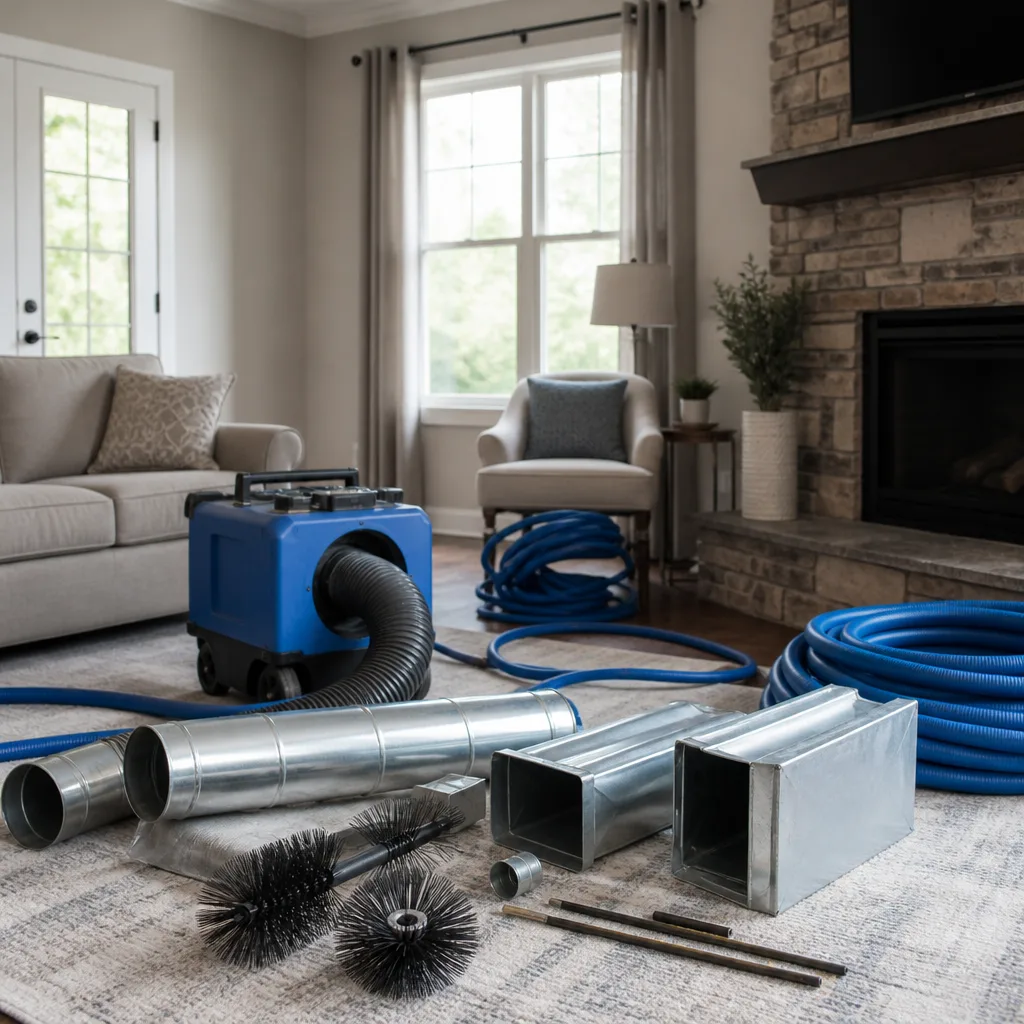 Whole-home duct cleaning
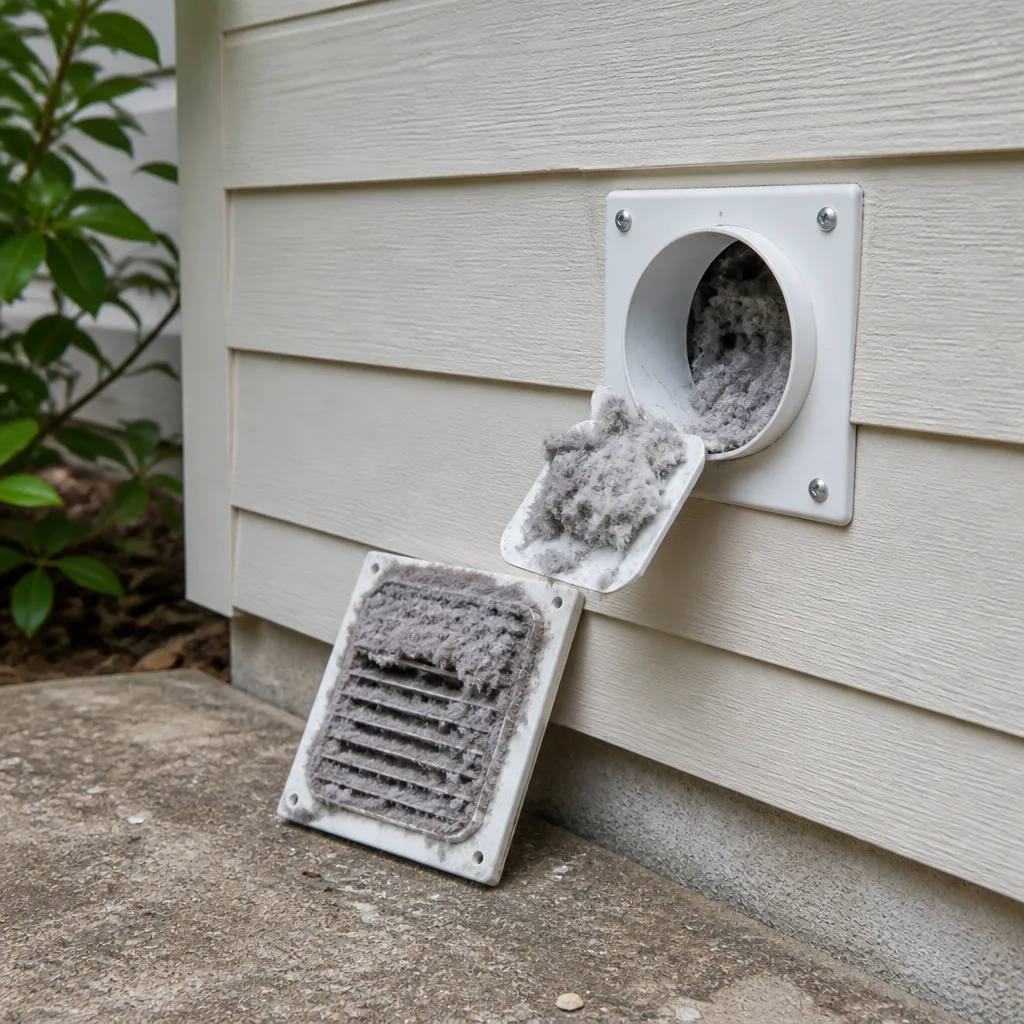 Dryer vent cleaning
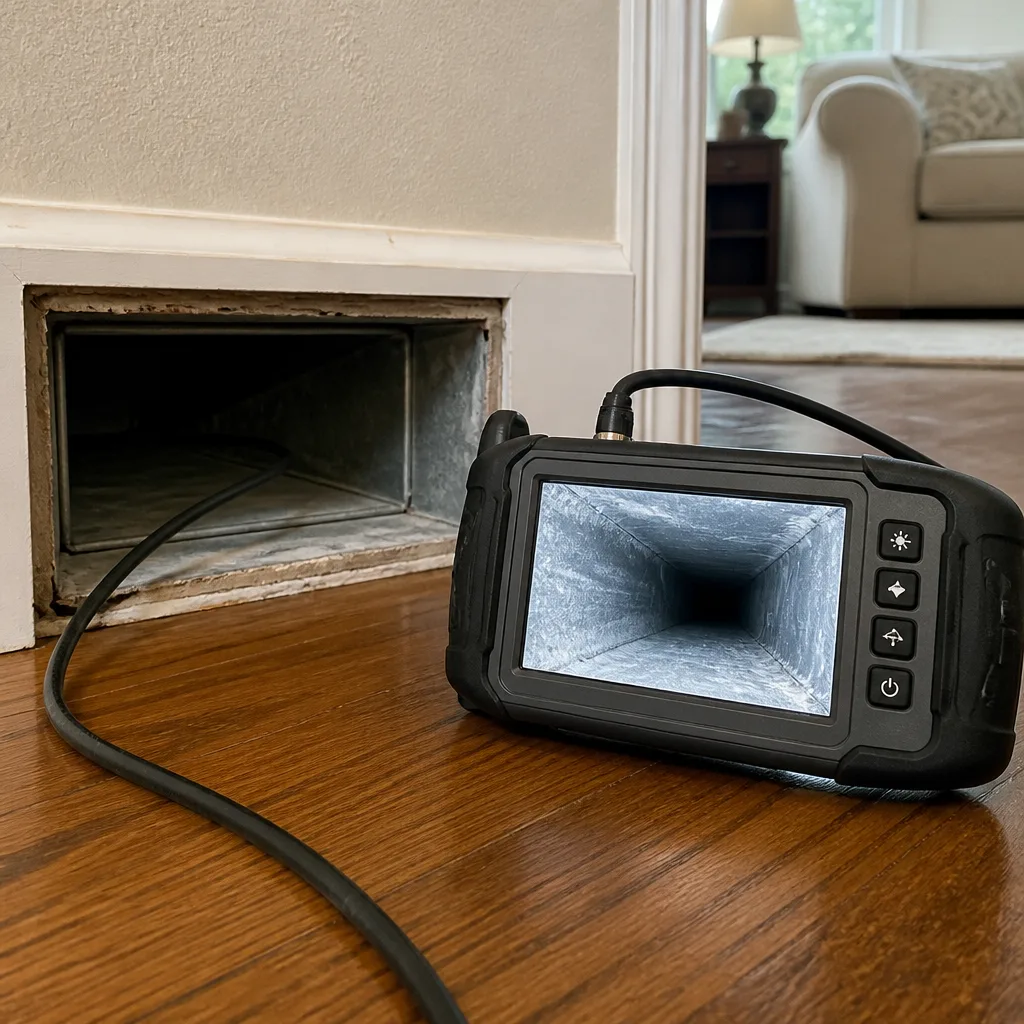 Camera inspection
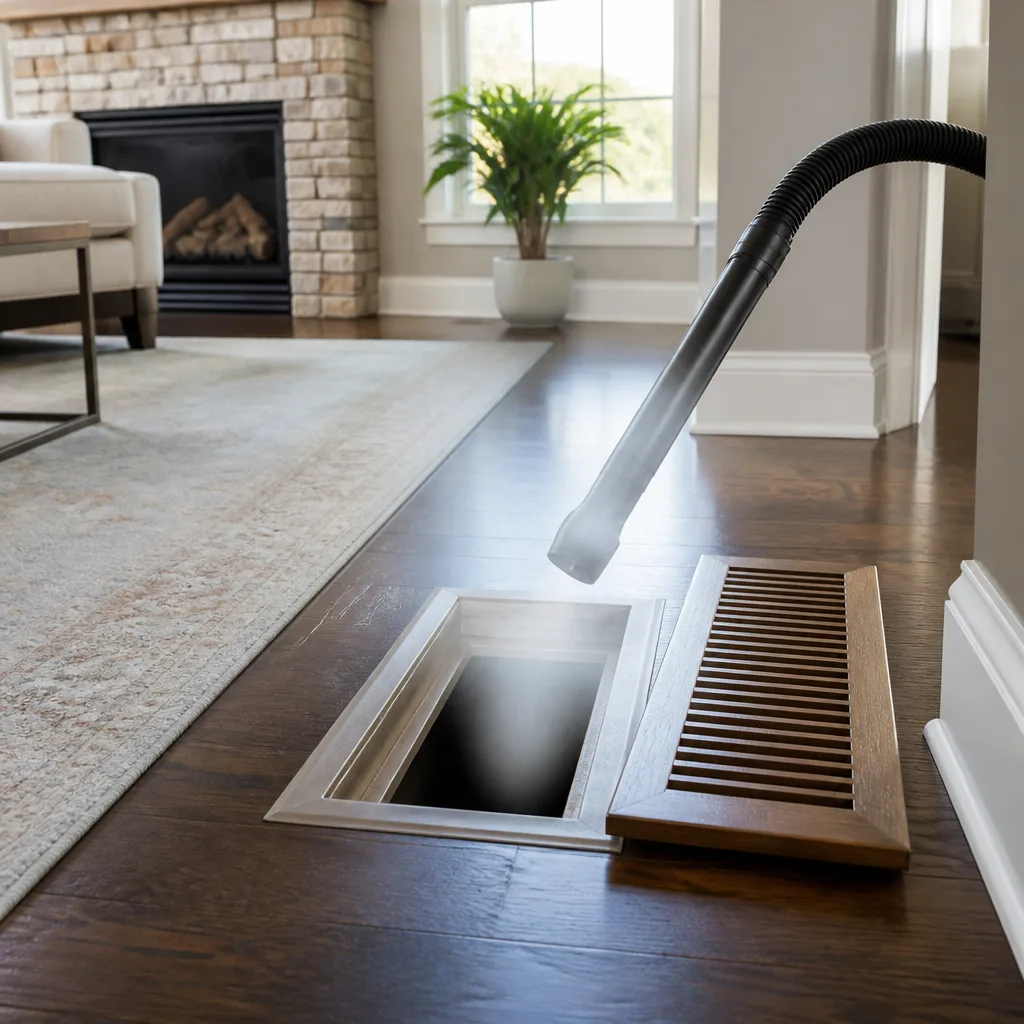 Sanitizing & deodorizing
Whole-system duct and dryer vent check with before-and-after photos - you see exactly what came out of your vents
That "$99 whole-house special" is a bait ad - the real number appears once they are in your hallway, or the "clean" is a shop-vac at the register. We photograph the inside of your ducts before and after instead.
Air Duct Cleaning Troubleshooting: Common Problems and How to Fix Them
A musty smell from one register and a musty smell from every register are two completely different problems. Confusing the two leads homeowners to either pay for a full-system cleaning that was never actually needed, or to spot-clean one room while the real issue festers in the air handler. Our Air Duct Cleaning Warning Signs: A Mira Mesa Homeowner’s Reference Guide maps the symptoms homeowners in Mira Mesa and similar climates actually report – odors, visible dust discharge, weak airflow, rattling – to their most likely duct-system causes. You’ll learn what a cleaning fixes, what a repair fixes, and how to tell the difference before anyone puts a vacuum hose in your vent.
Quick Answer
Most duct problems fall into two categories: contamination (dust, debris, mold, pest activity) that responds to professional cleaning, and structural failure (leaks, disconnected sections, crushed flex duct) that requires repair before cleaning has any lasting value. The first diagnostic step is always isolation – determining whether the symptom comes from one register, one room, one zone, or the entire system. Air Duct Cleaning Mira Mesa approaches every job this way: diagnose the source, then match the equipment and scope to the actual problem rather than defaulting to a one-price full-system cleaning.
Styles & brands we work with
- Whole-home duct cleaning
- Dryer vent cleaning
- Camera inspection
- Sanitizing & deodorizing
Table of Contents
- The Symptom-to-Cause Diagnostic Table
- Cleaning Problem vs. Repair Problem: When You Have Both
- Odors: How to Isolate the Source Before You Call Anyone
- Visible Dust and Debris at Registers
- Weak or Uneven Airflow
- Rattling, Popping, and Other Duct Noises
- Allergy Flare-Ups and Respiratory Irritation
- Red Flags: When a Contractor Is Guessing, Not Diagnosing
The Symptom-to-Cause Diagnostic Table
Most symptoms homeowners notice point to one of four failure points: the return-side ductwork, the supply-side ductwork, the air handler components, or the register and boot assembly. Here’s what we see most often in Mira Mesa homes, where dust from canyon winds and dry inland air create conditions that differ meaningfully from coastal San Diego neighborhoods.
| Symptom | Most Likely Cause | Cleaning Fix? | Repair Fix? |
|---|---|---|---|
| Musty smell from one register only | Moisture in that specific duct run or boot, possibly from condensation or a small breach | Yes, targeted | Sometimes – breach sealing |
| Musty smell from every register | Mold or microbial growth on the evaporator coil or in the drain pan, circulating system-wide | No – coil cleaning needed | Sometimes – drain issues |
| Visible dust blowing from registers when system runs | Debris accumulated in supply ductwork from construction, years of bypassed filtration, or a breached return pulling attic debris | Yes, full-system | If return-side breach exists, yes |
| Weak airflow in one room only | Crushed flex duct, disconnected section, or a damper that’s been closed | No | Yes |
| Weak airflow throughout the house | Dirty coil, collapsed return duct, or severely restricted filter | Partial | Sometimes |
| Rattling or popping when the system cycles on/off | Loose duct connections, unsecured hanging straps, or expansion of poorly fitted sheet metal | No | Yes |
| Allergy symptoms worsen when HVAC runs | Return-side leakage pulling attic dust, pest debris in ductwork, or heavily soiled duct surfaces | Yes, if contamination present | Yes – seal return leaks first |
This table is the starting point. The rest of this guide walks through each symptom in detail, including the specific questions to answer and the diagnostics that separate a cleaning job from a repair job. Here’s the full story on Air Duct Cleaning in Mira Mesa if you want the service detail behind the diagnostic process.
Cleaning Problem vs. Repair Problem: When You Have Both
The single most important distinction in duct troubleshooting is the difference between contamination and structural failure. Contamination is what professional cleaning addresses: accumulated dust, pet dander, hair, construction debris, and the microbial films that form on duct surfaces over years of conditioned air passing through. Structural failure is a leak, a disconnected joint, a crushed flex run, or a gap at the plenum connection. Cleaning cannot fix structure. And here’s the part most homeowners don’t hear from generalist HVAC companies: cleaning a leaking duct system is largely wasted money.
Here’s why. A supply-side leak downstream of the cleaning equipment doesn’t undo the cleaning, but it means the air you paid to condition is escaping into the attic or crawlspace before it reaches your rooms. A return-side leak is worse – it actively pulls unfiltered air, insulation fibers, and whatever else lives in your attic directly into the system. So you clean on a Tuesday, and by Thursday the return side has pulled fresh attic dust into the airflow. The registers look dirty again. You conclude the cleaning didn’t work. The cleaning worked; the leak defeated it.
We see this exact pattern in Mira Mesa regularly. Homes here range from 1970s builds with original sheet metal plenums to newer tracts where flex duct was installed quickly during the 2000s construction boom. The older sheet metal tends to leak at joints where tape has dried and peeled. The newer flex duct gets crushed when someone stores boxes in the attic, or separates at the collar where it meets the register boot. Both are repair issues first.
- Identify whether the symptom is contamination or structural. Odors and visible debris usually mean contamination. Airflow loss and noise usually mean structure.
- If both exist, repair comes first. There’s no point vacuuming a duct run that’s disconnected at the collar – the air isn’t reaching the room anyway.
- Then clean the sealed, intact system. The cleaning now has durable value because contaminant ingress has been stopped at the source.
- Re-test airflow and check filter condition 30 days after the work. This catches any remaining issue before it compounds.
Our Air Duct Repair in Mira Mesa service exists specifically because we kept encountering cleaning jobs where the real problem was a leak – and homeowners who’d paid for cleaning elsewhere but never saw results because nobody sealed the breach first.
Odors: How to Isolate the Source Before You Call Anyone
The diagnostic question with any odor is simple: does it come from one register, from every register, or from everywhere in between? The answer routes you to completely different solutions. A smell at one register that fades when the system is off points to something in that specific duct run or boot – moisture, a dead pest, or accumulated organic debris. A smell from every register that’s strongest when the system first kicks on typically points to the evaporator coil or drain pan in the air handler. That’s not a duct cleaning problem at all.
One Register Only
Remove the register cover and look inside with a flashlight. You’re checking for visible moisture staining, debris that shouldn’t be there, or the unmistakable signs of rodent activity. Mira Mesa’s older neighborhoods have mature landscaping and occasional rodent pressure from canyon areas – mice and rats find their way into duct runs through gaps at the plenum or through damaged flex. If you confirm debris or contamination in that run, a targeted cleaning of that section resolves it. If the duct surface itself is stained from past moisture, that run may need replacement – cleaning doesn’t un-stain saturated fiberglass liner.
Every Register
An odor that comes from every register, every time the fan runs, is being generated upstream of the distribution network. In residential systems, that means the evaporator coil, the drain pan, or the air handler cabinet itself. A coil that’s accumulated a microbial film from years of condensation will distribute that smell through the entire duct system. Running a full duct cleaning without addressing the coil leaves the source intact. The smell returns within days, and the homeowner thinks duct cleaning doesn’t work. It works – it was the wrong tool for that job.
Here’s a straightforward isolation test we walk our Mira Mesa customers through before they commit to any scope of work:
- Turn the system fan to ON, not AUTO. This runs the fan without the cooling cycle.
- Walk to each register and smell. Is the odor consistent everywhere, or concentrated?
- Check the air handler closet or garage. Is the smell stronger there than at any register?
- Note whether the smell intensifies when the AC kicks on, or whether it’s constant whenever the fan runs.
If the smell is strongest at the air handler and constant with fan operation, the coil or drain pan is the likely source. If it only appears at registers when cooling runs, you may be smelling condensation-related microbial activity in the cold supply ducts. Both are diagnosable with the right equipment before any cleaning is approved.
Visible Dust and Debris at Registers
Seeing dust accumulate around your register faces, or worse, seeing dust particles actively blow into the room when the system starts, means one of three things. The filter has been bypassing, the return side is pulling unfiltered air from somewhere it shouldn’t, or the ducts themselves are loaded with years of accumulated debris that’s slowly shedding into the airflow.
Mira Mesa sits in a dry inland climate, and when the Santa Ana pattern kicks up, fine particulate works its way into every exterior gap a house has. If your return ducting in the attic has a leak, that fine dust bypasses the filter entirely. The filter can be pristine, and you’ll still see dust discharge at the supplies, because the air never passed through it in the first place. This is why we emphasize return-side inspection before any cleaning scope is finalized.
The telltale sign of return-side leakage versus dirty supply ducts is timing: dust that appears immediately after the system cycles on, diminishes while running, and reappears at the next cycle suggests debris settling in the supply ducts during off-cycles and being blown out on startup. Dust that’s continuous and fine suggests an active return-side pull – the system is manufacturing dust, not just releasing stored dust. The fix paths are different. Continuous fine dust means find and seal the return leak, then clean. Startup dust means the supply side is loaded and needs extraction.
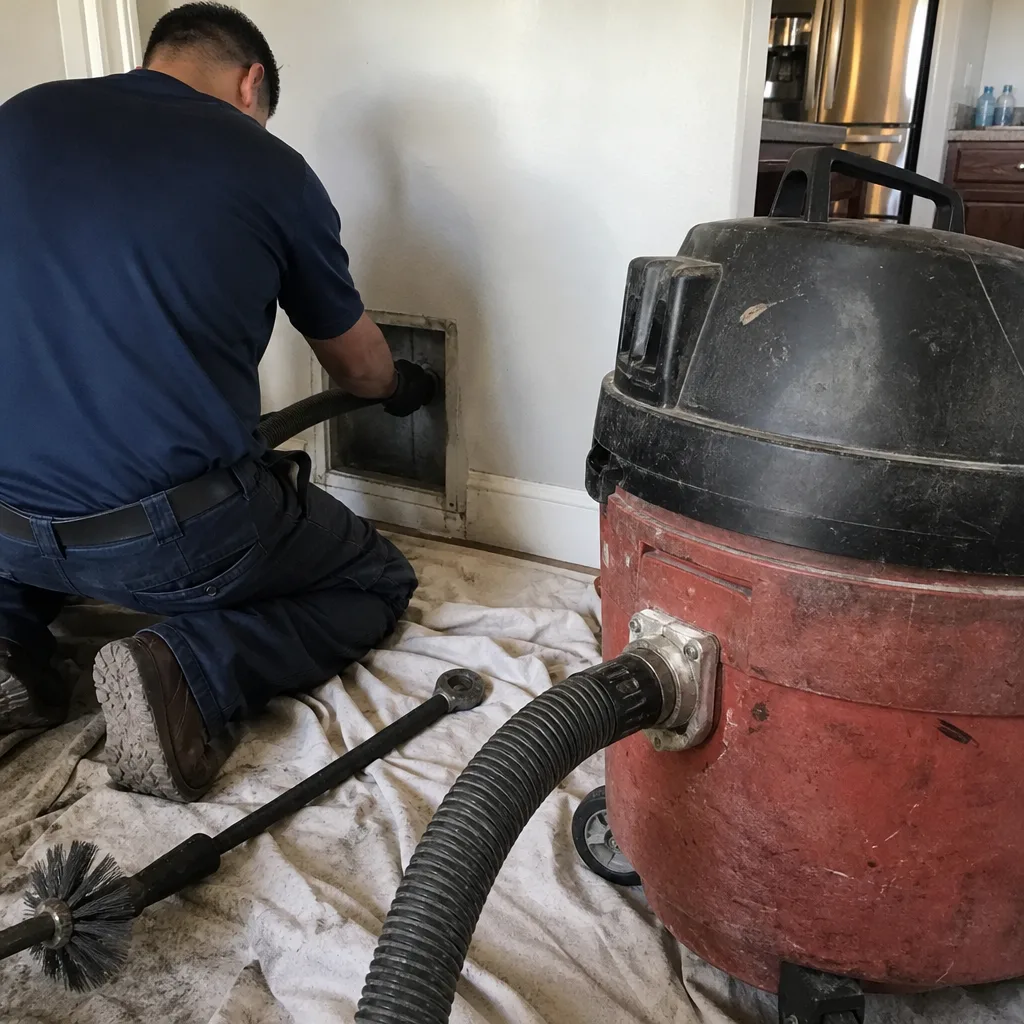
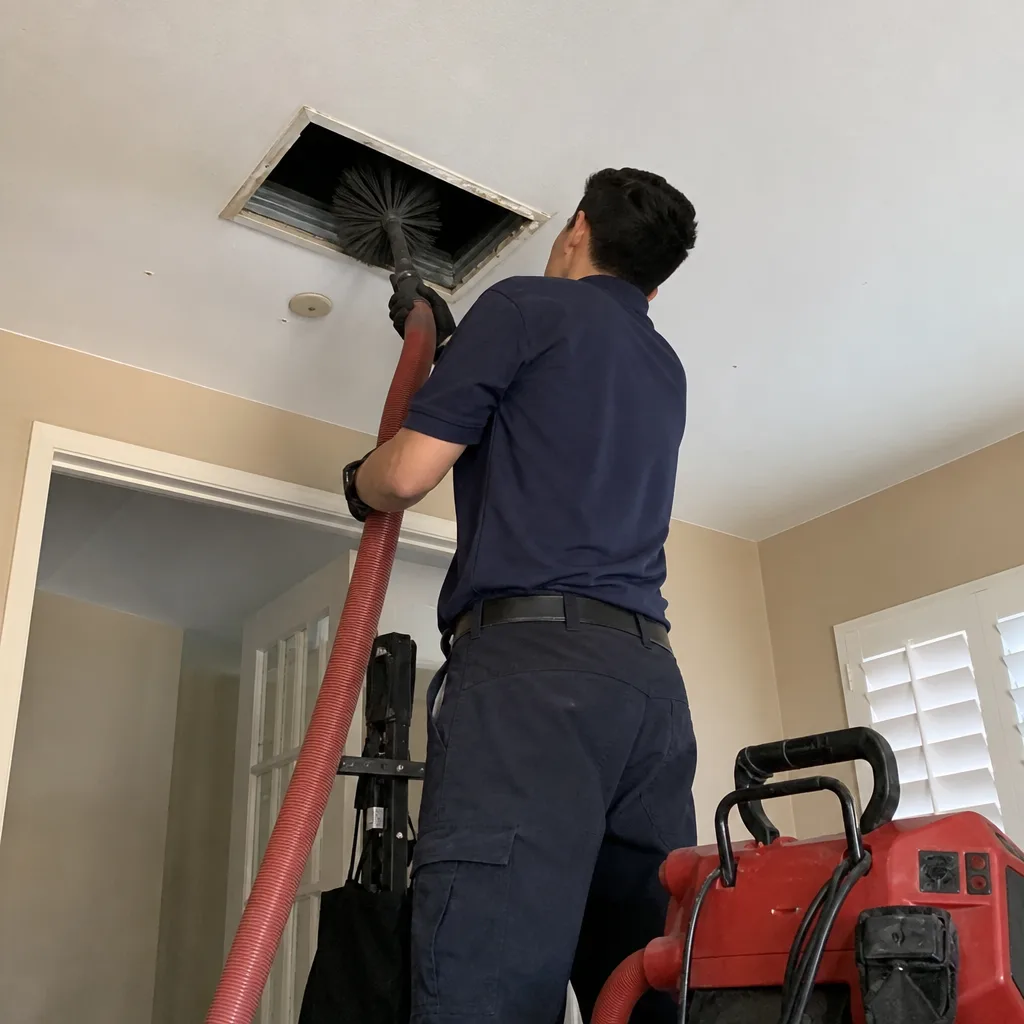
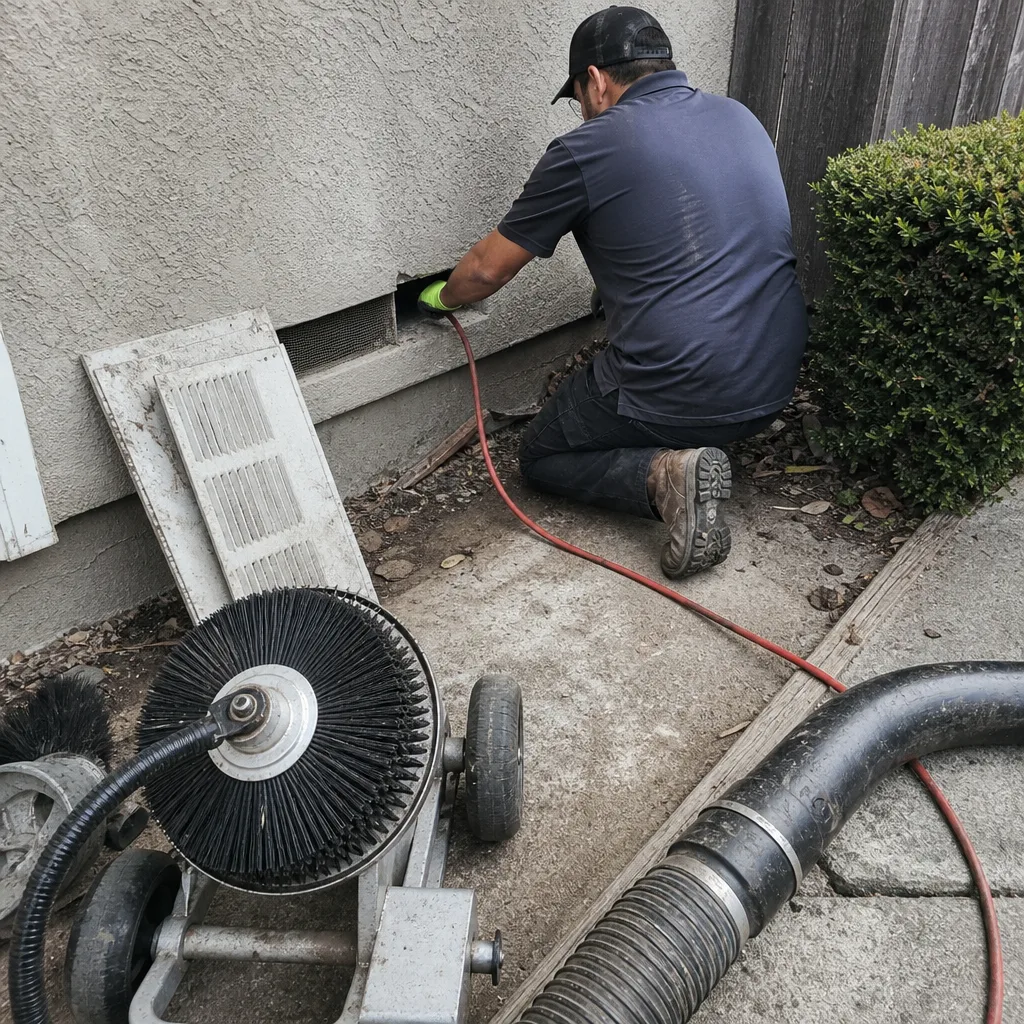
A professional cleaning with brush agitation and negative-pressure extraction – the approach we use with Rotobrush systems – removes the debris that’s adhered to duct surfaces. But it must happen after any breach is sealed, or the contaminant source remains. Better to fix the wound, then clean the system, than to clean and let the wound keep bleeding attic dust.
Weak or Uneven Airflow
When one bedroom in Mira Mesa never seems to reach the thermostat setpoint while the living room is freezing, the problem is almost never that the system is undersized. It’s an airflow delivery problem. The fan is producing the same volume of air; somewhere between the plenum and the register, that air is being lost or restricted.
Weak airflow in one room – the diagnosis is structural, not cleanliness. The cause is usually one of three things: a crushed flex duct (someone stored Christmas boxes on it in the attic), a disconnected section at a joint or collar, or a fire damper or balancing damper that’s been pushed closed. None of these respond to cleaning. Fixing them is a duct repair scope: access the attic, locate the restriction, replace or reconnect the section, and re-seal. We can often see the problem in the before-and-after flow test at the register without ever cutting into drywall.
Weak airflow throughout the house – this one can be a cleaning problem, because a severely fouled evaporator coil or a restricted blower wheel reduces total system airflow to every room equally. It can also be a collapsed return duct, which starves the system on the intake side. If the filter’s clean, the coil and blower become the prime suspects. A coil that hasn’t been cleaned in years functions as an increasingly effective damper. As the coil loads, airflow drops, system efficiency drops, and your energy bill climbs while comfort falls. This is the classic slow-decline scenario many Mira Mesa homeowners describe as “it works, it just doesn’t work like it used to.”
Steps for Diagnosing Airflow Loss Before You Call
- Replace or check the filter. A filter that’s clogged can reproduce every symptom in this section.
- Open all registers and return grilles. Closed registers in unused rooms increase static pressure and reduce total system airflow.
- Walk to each register and compare. Does the weak room share a duct run with a strong room? That points to a damper or crush.
- If whole-house airflow is down equally, suspect the coil or blower. This is where a professional inspection with the right equipment pays for itself.
And honestly, the fan-in-a-window air quality conversation is broader than duct cleaning. Our work intersects with the broader IAQ ecosystem – we’re familiar with Honeywell and Aprilaire platform components, which means when airflow problems stem from filter selection or IAQ accessory placement rather than duct condition, we can explain that context rather than just upsell a cleaning.
Rattling, Popping, and Other Duct Noises
Ducts make noise for exactly two reasons: something is loose, or something is expanding. Both are structural. No amount of cleaning resolves a rattle, because the sound isn’t coming from debris – it’s coming from a physical connection that’s failed or a material that’s under stress.
The most common noise pattern we hear about in Mira Mesa is a pop or boom when the system cycles on or off. Sheet metal plenums and rectangular trunk lines flex under pressure changes. When the blower kicks on, the ductwork pressurizes and the metal bows slightly. When it kicks off, the pressure drops and the metal returns. If the seams are tightly connected, this is silent. If the connections have worked loose over 20 or 30 years of thermal cycling, the metal shifts and pops. Fixing it means re-securing the joints, often with screws and mastic sealant rather than tape.
Rattling during operation is typically a hanging strap that’s come loose, a section of flex duct that’s resting against a framing member, or a register face that’s not seated tightly in its boot. These are fast diagnostic wins. But here’s what matters about the noise category: if you hear a rattle and call a duct cleaning company, and they accept the job without asking where the noise is coming from, they’re selling you a cleaning, not solving your problem. You’ll have cleaner ducts and the same rattle. A tech who troubleshoots will locate the noise source first and tell you honestly whether it’s a repair or a cleaning scope.
Allergy Flare-Ups and Respiratory Irritation
This is the most emotionally charged symptom, and the one where homeowners are most vulnerable to overselling. The straightforward reality: if your allergy symptoms worsen when the HVAC runs and improve when it’s off, there’s a causal link between your duct system and your indoor air quality. But the cause isn’t always what the internet implies it is.
The most likely culprit in Mira Mesa is return-side leakage. The return duct runs through an attic that’s full of decades of fine dust, blown-in insulation fibers, and whatever histamines exist in that environment. A breach in the return pulls that air directly into your conditioned space, bypassing the filter entirely. Your symptoms aren’t from dirty supply ducts – they’re from unfiltered attic air being injected into every room. The fix is sealing the return leak, not cleaning the supply side.
The second possibility is accumulated debris on duct surfaces that sheds into the airstream. When this is the case, the professional-grade extraction approach we use with Rotobrush agitation clears the adhered material. A shop-vac type consumer approach won’t accomplish this – the debris is adhered, not loose, and requires mechanical agitation to release. We run Nikro negative-pressure protocols for heavier contaminant loads, maintaining negative pressure on the duct system during cleaning so that released debris is captured rather than pushed into the living space. This is the equipment-level difference between a residential cleaning that works and one that just moves dust around.
If the symptoms do trace back to duct contamination, the cleaning resolves the irritant load. If they trace back to a leak, sealing resolves it. Both require accurate diagnosis before equipment goes in the door.
Red Flags: When a Contractor Is Guessing, Not Diagnosing
Most of what goes wrong in the air duct cleaning industry isn’t equipment quality – it’s diagnosis quality. Companies with commercial-grade tools still fail when they skip the diagnostic step. Here’s what guessing looks like, and the questions that expose it.
- They quote a price before seeing the system. A legitimate scope requires seeing the furnace, the plenums, the return configuration, and ideally the attic. A per-vent quote delivered over the phone before anyone has looked at the house means the company is selling a standardized cleaning, not a solution.
- They can’t explain what negative pressure does. Ask how they’ll prevent dust from the cleaning process from entering your living space. If the answer is vague, they’re not running negative-pressure containment. The equipment matters.
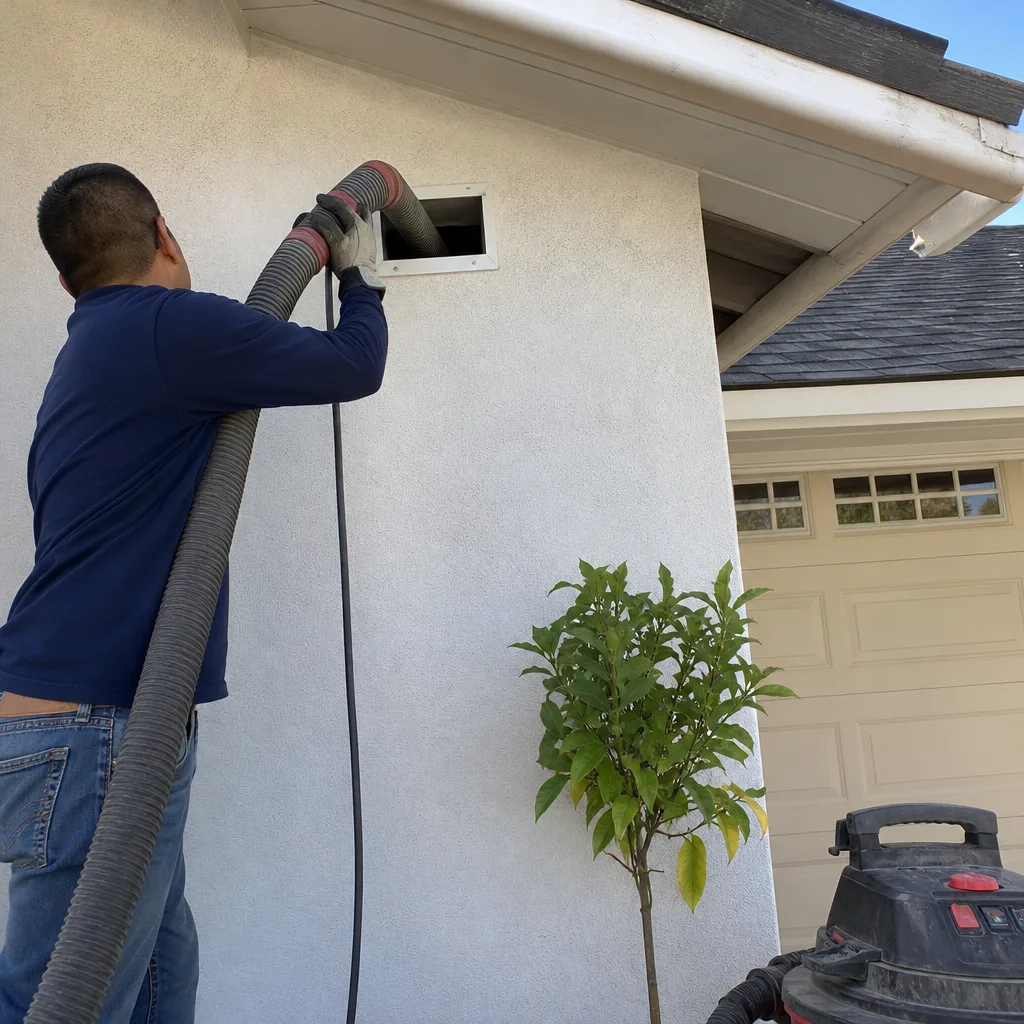
- They lump dryer vent cleaning into the air duct scope without asking when the dryer vent was last done. This is a distinct service with its own safety implications. A company that treats it as an add-on line item rather than a dedicated Dryer Vent Cleaning in Mira Mesa scope doesn’t take lint fires seriously.
- They tell you every problem is solved by cleaning. If you report weak airflow to one room and they accept the job without asking whether the room has ever flowed properly, they’re not troubleshooting. Cleaning won’t fix a crushed duct.
- They won’t show you before-and-after photos. We provide them as standard practice. If a company is reluctant to show you what the inside of your ducts looked like before and after their work, ask yourself why.
- They answer “how often should I have this done” with a specific interval, unprompted. Service intervals depend on what’s in the system, the leak status of the ductwork, the filter discipline of the household, and the local environment. A universal answer is a marketing answer, not a diagnosis.
The right questions to ask before approving any scope:
- “What did you find when you inspected the system?” – requires an inspection, not a walkthrough.
- “Does the contamination trace to a specific source, or is it general accumulation?” – sources need sealing; general accumulation needs extraction.
- “Is this a cleaning scope, a repair scope, or both?” – if the answer is always “cleaning,” walk.
- “What equipment do you run, and does it maintain negative pressure during extraction?” – hear specific tool names or don’t proceed.
- “Will you show me photos of the duct interior before and after?” – yes is the only acceptable answer.
Common Mistakes to Avoid
- Cleaning before sealing leaks. If the return side has a breach, you’ll re-contaminate within weeks. Seal first, clean second. We turn down work when the sequence is wrong, because it’s wasted money for the homeowner.
- Treating every odor as a duct problem. An odor from every register points to the coil or drain pan, not the ductwork. Different cleaning process, different equipment, different cost. Diagnose before you spend.
- Using a consumer shop-vac approach on adhered debris. Debris that’s been baking onto duct surfaces for a decade doesn’t respond to suction alone. It needs agitation to release it and negative pressure to capture it. This is the equipment gap that separates professional results from frustrated attempts.
- Assuming weak airflow means a bigger HVAC system. Collapsed ducts, closed dampers, and fouled coils all masquerade as “underpowered” systems. Fix the restriction, then evaluate the equipment. A larger system on the same restricted ductwork delivers the same poor airflow with a higher energy bill.
- Ignoring the dryer vent because the dryer “still works.” Lint restriction rises slowly, and the dryer compensates by running longer cycles. By the time you notice, the vent may be significantly loaded. In Mira Mesa, where laundry rooms often vent through long runs to exterior walls, this is consistently under-served. Dedicated dryer vent cleaning is fire prevention, not housekeeping.
- Accepting a quote from someone who never goes in the attic. If the tech never goes up, they can’t see the return leak, the crushed flex run, or the disconnected collar. They’re cleaning blind. There’s a reason we carry Abatement Technologies containment equipment – because the conditions we need to evaluate are in the attic, and the contaminant needs to stay there.
- Replacing a filter while the return leak is still pulling around it. A high-MERV filter on a return with a bypass leak is false comfort. The air goes around the filter. Fix the bypass, then the filter does its job.
See the difference
 Before
 After
 Before
 After
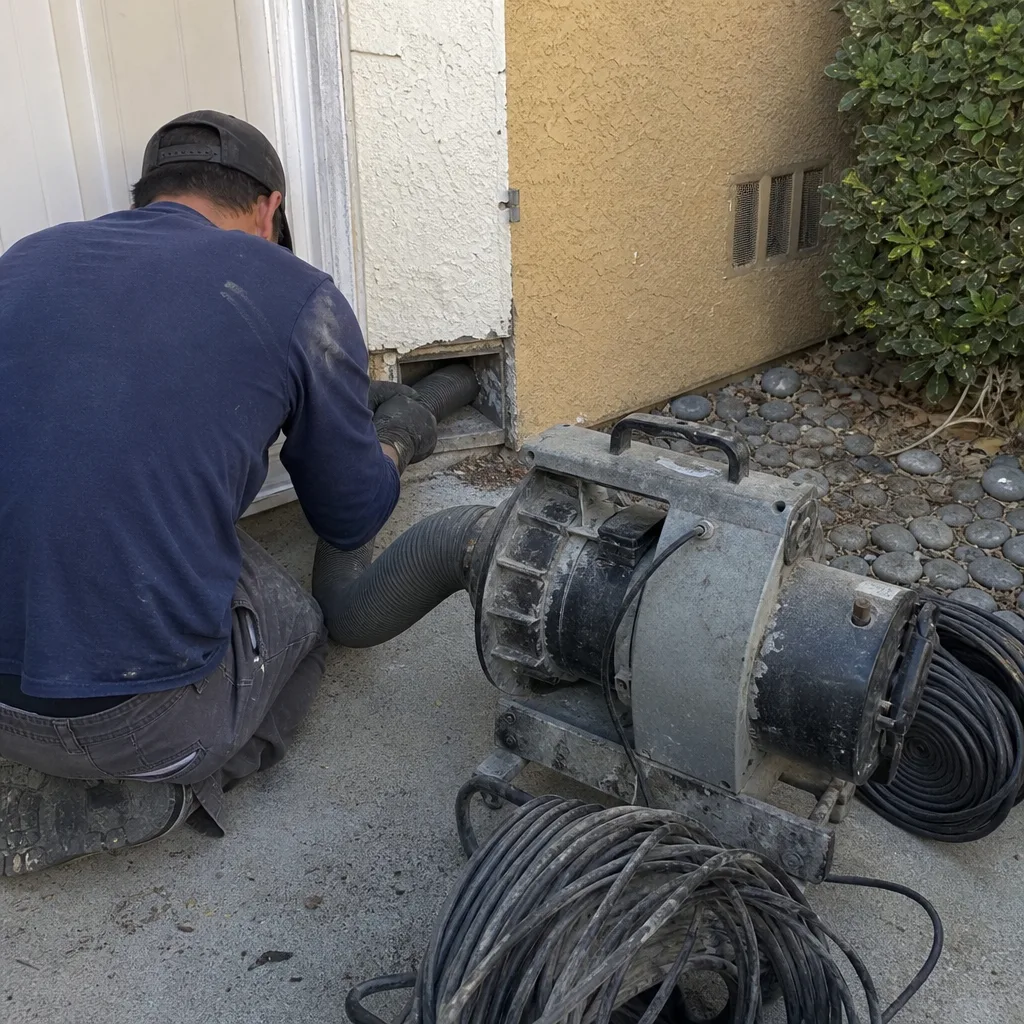 Before
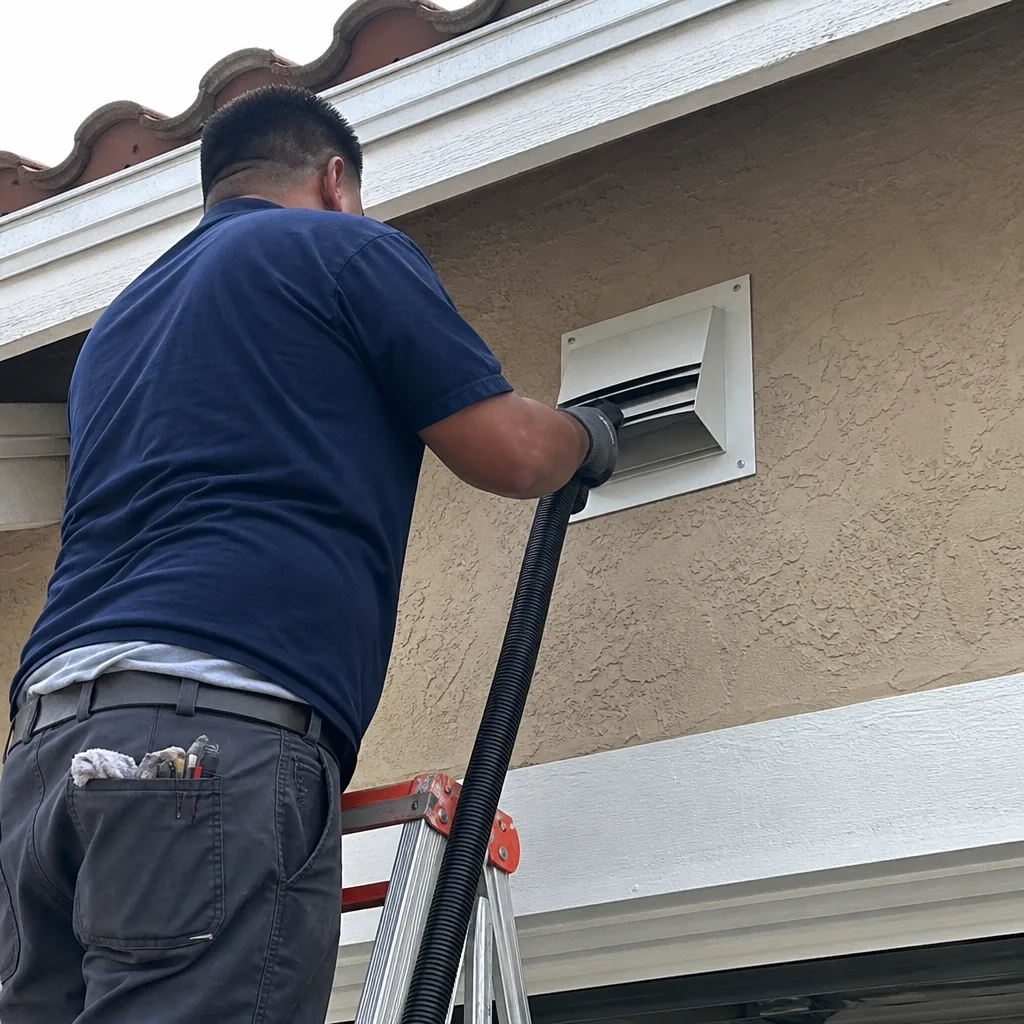 After
When to Call a Professional
Call when the symptom persists after you’ve checked the basics: filter, registers, visible duct runs in unconditioned spaces. Call when the odor is strongest at the air handler or appears at every register – that’s not a DIY diagnosis. Call when airflow to one room was never right and you’ve confirmed the register is open. Call when you can see visible debris inside a register boot when you remove the cover and shine a light. Call when your allergy symptoms track with fan operation rather than season. Air Duct Cleaning Mira Mesa offers free estimates in Mira Mesa – call (833) 734-7428 and we’ll inspect the system, identify whether you have a cleaning problem, a repair problem, or both, and tell you honestly which one to solve first.
Frequently Asked Questions
You need cleaning when there’s visible debris inside the ductwork, dust discharge from registers when the system starts, an odor that traces to the duct system rather than the coil, or confirmed contamination from pests or construction. Most homes in Mira Mesa with original ductwork from the 1990s or earlier have never been professionally cleaned. Call (833) 734-7428 for an inspection-based assessment rather than a guess.
A smell confined to one room points to that specific duct run or register boot, which means targeted inspection and likely targeted cleaning rather than a full-system scope. The cause is usually moisture in that run, a dead pest, or debris accumulation at the boot. If the smell returns after cleaning, the run may have a moisture source that needs repair.
Dirty ducts can contribute to respiratory irritation when debris and allergens are recirculated through the system, and return-side leaks can pull attic dust and insulation fibers into the living space. The specific health impact depends on the individual and the contaminant. The solution is accurate diagnosis: determine whether the irritant source is the duct contamination, a breach, or the coil, then address that source specifically.
Cleaning removes accumulated contamination from duct surfaces; repair addresses physical failures like leaks, crushed flex runs, loose connections, and damaged plenums. They are different services with different equipment and different outcomes. This page about Air Duct Repair in Mira Mesa explains the repair scope in detail. We tell every customer which one they need before discussing either scope.
That depends on the specific system’s leak status, filter discipline, and the household. A sealed system with good filtration may go many years between cleanings; a system with return-side leaks in a dusty attic may re-contaminate quickly. The honest answer is inspection-based, not interval-based. After an initial inspection and cleaning, we’ll tell you what interval your specific system realistically needs.
If your ducts show no contamination on inspection and your airflow is balanced, cleaning would be an unnecessary expense – we’d tell you that rather than take the job. But construction debris from the original build is extremely common in newer Mira Mesa communities, because drywall dust and lumber debris enter the duct system during construction before the finish work is done. If the builder never cleaned post-construction, the system is carrying debris from day one.
Fast dust accumulation despite filter changes points to return-side leakage or a bypass situation – the system is pulling unfiltered air from the attic or exterior and distributing it through the house. The filter can’t help if air isn’t passing through it. Our inspection process checks the return path specifically for this condition, because it’s the most common root cause we find in Mira Mesa homes.
The Bottom Line
Duct problems don’t all require the same solution, and the most expensive mistake in this category is paying for a cleaning when the problem was a repair – or vice versa. Diagnose by symptom: contamination responds to extraction with agitation and negative pressure; structural failure responds to sealing and mechanical repair. Both are worth fixing, in the right sequence. And if you’re not sure which one you have, an inspection that shows you the inside of your ductwork is worth more than any quote offered over the phone. Air Duct Cleaning Mira Mesa exists to do the diagnostic-driven version of this work: find the actual source, match the right equipment to the finding, and tell you honestly what needs to happen.
We’re based in Mira Mesa and serve the surrounding communities. Our equipment – Rotobrush for agitation and extraction, Nikro for negative-pressure containment, plus the brand awareness to integrate with Honeywell and Aprilaire IAQ platforms – is commercial-grade, applied to residential jobs. We can talk through what you’re seeing and recommend an inspection, a cleaning, or a repair as the evidence dictates. Start with the Air Duct Cleaning Mira Mesa home page for the service overview, or call us at (833) 734-7428 and describe what’s happening. We’ll tell you what we think before we ever schedule a truck.
Written by the team at Air Duct Cleaning Mira Mesa, serving Mira Mesa since 2011.