
Last updated November 2, 2026
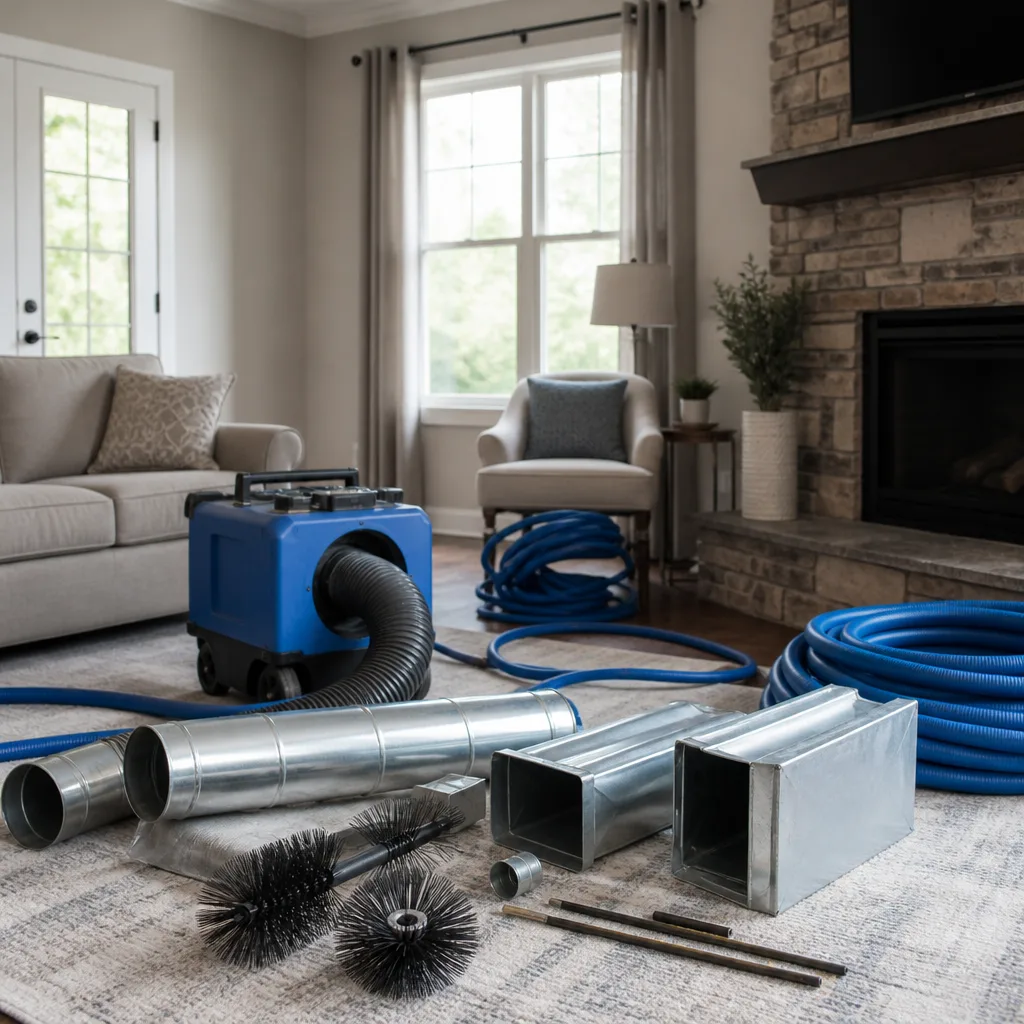 Whole-home duct cleaning
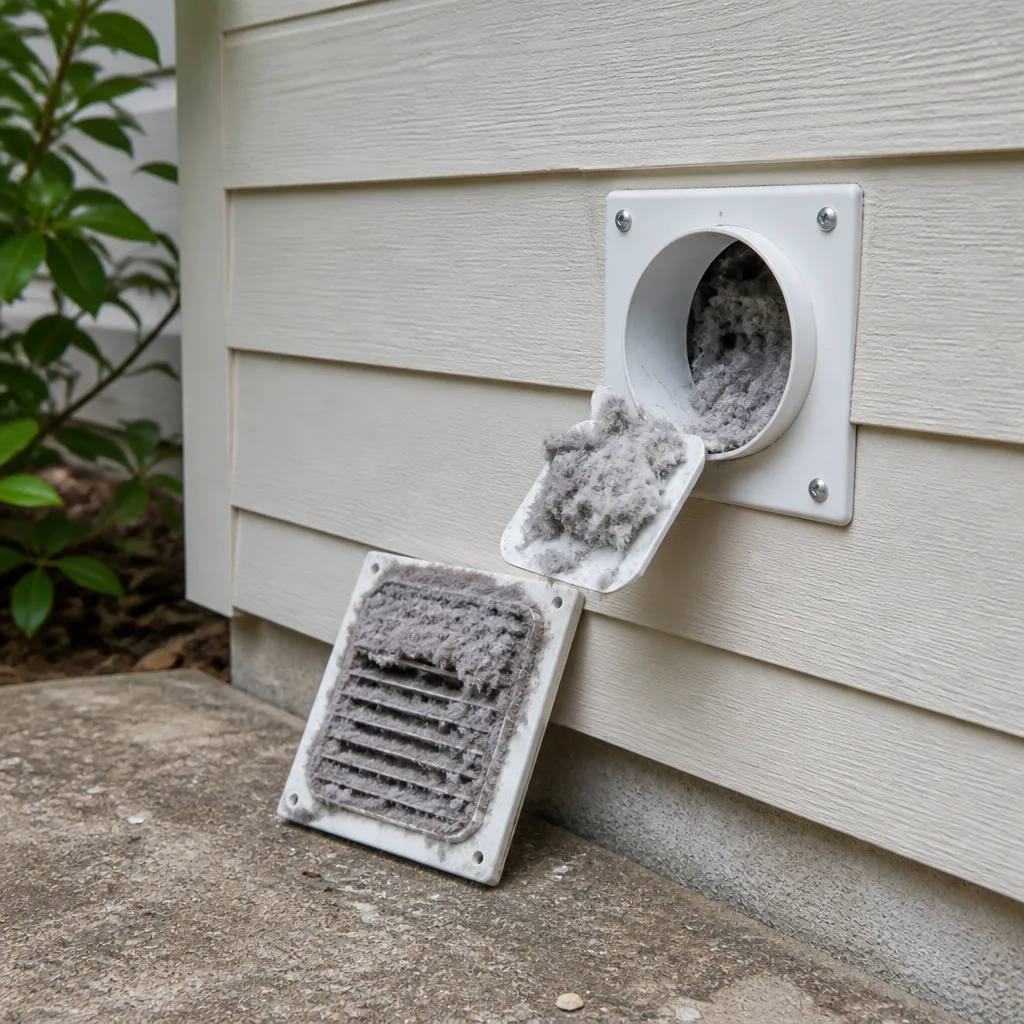 Dryer vent cleaning
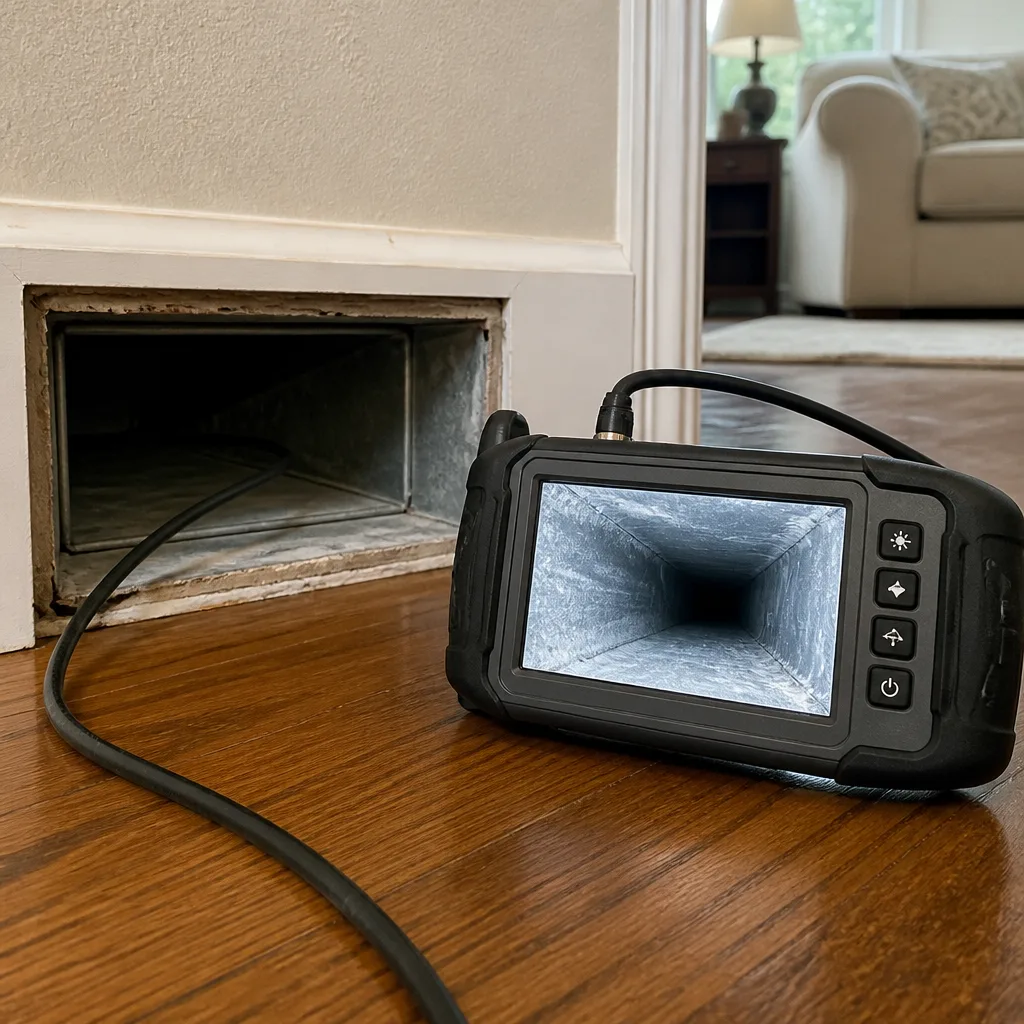 Camera inspection
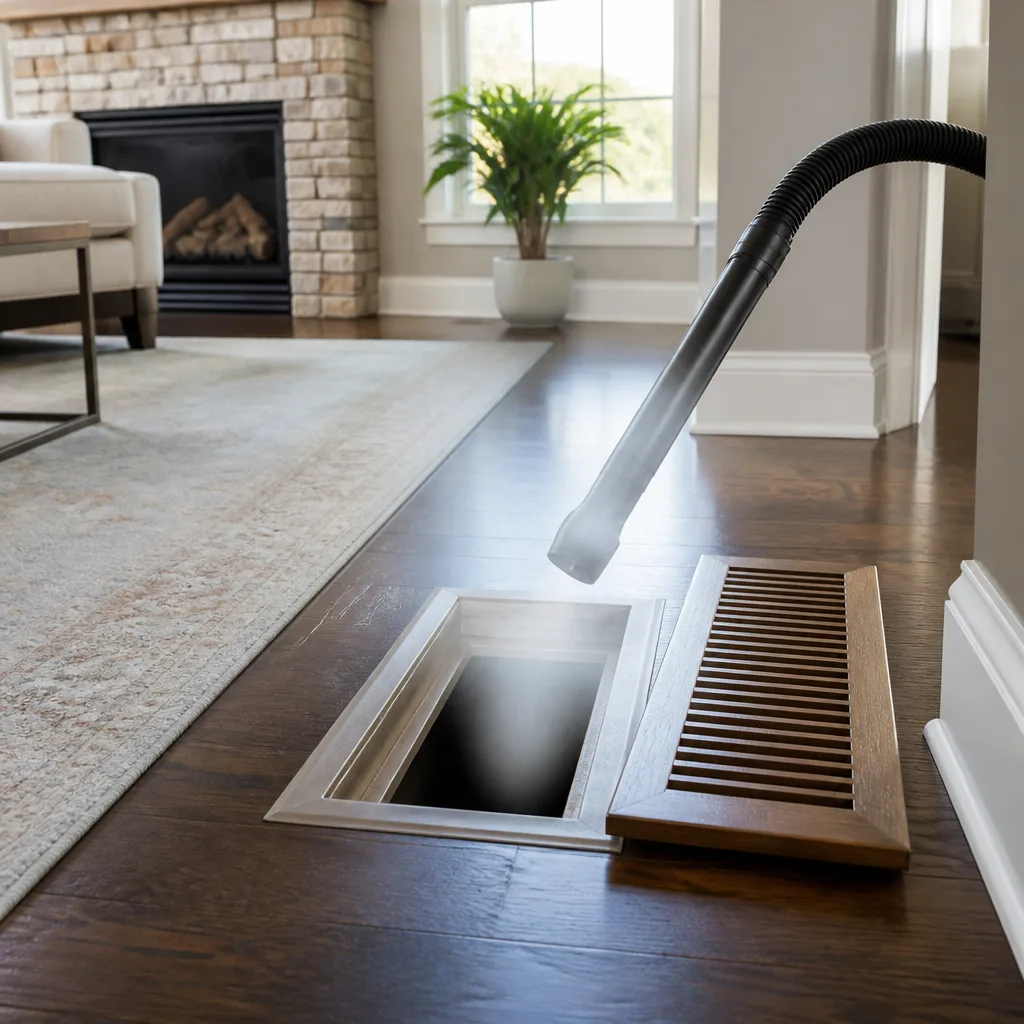 Sanitizing & deodorizing
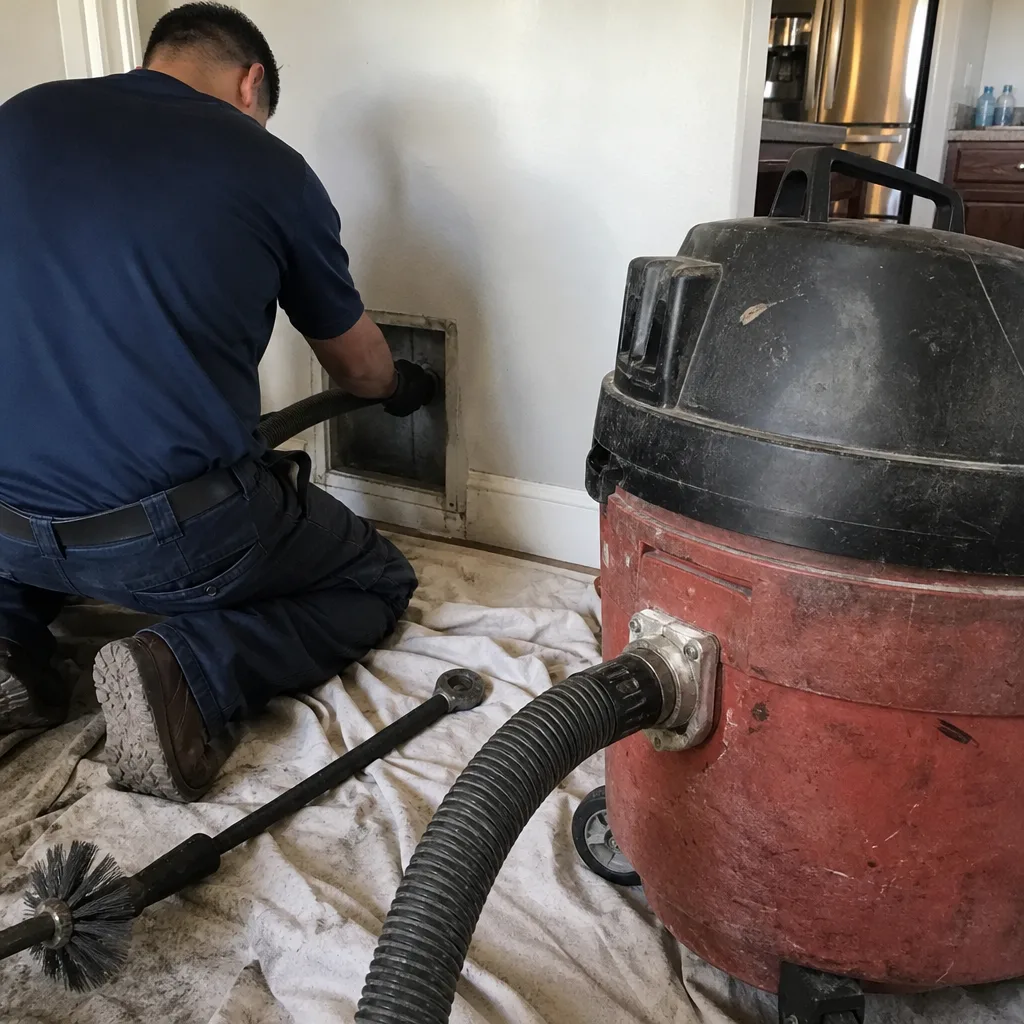
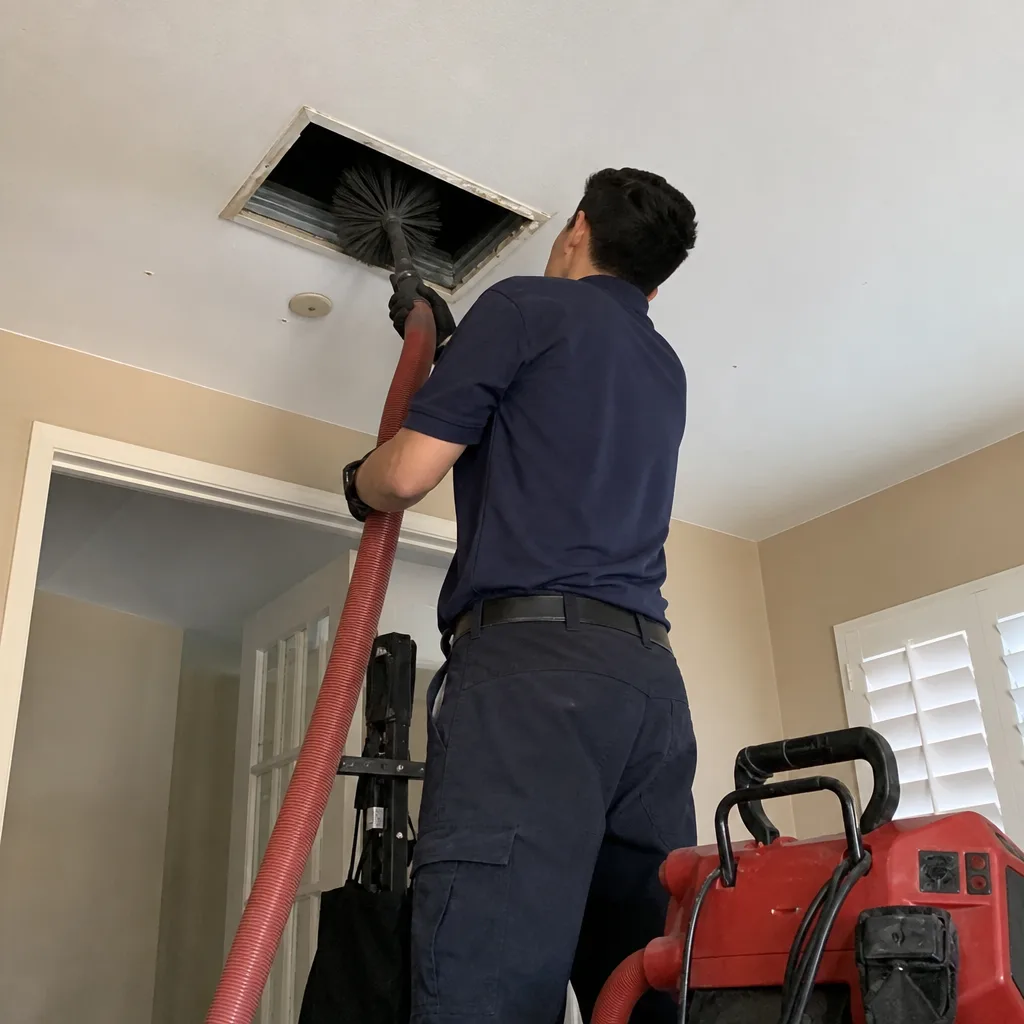
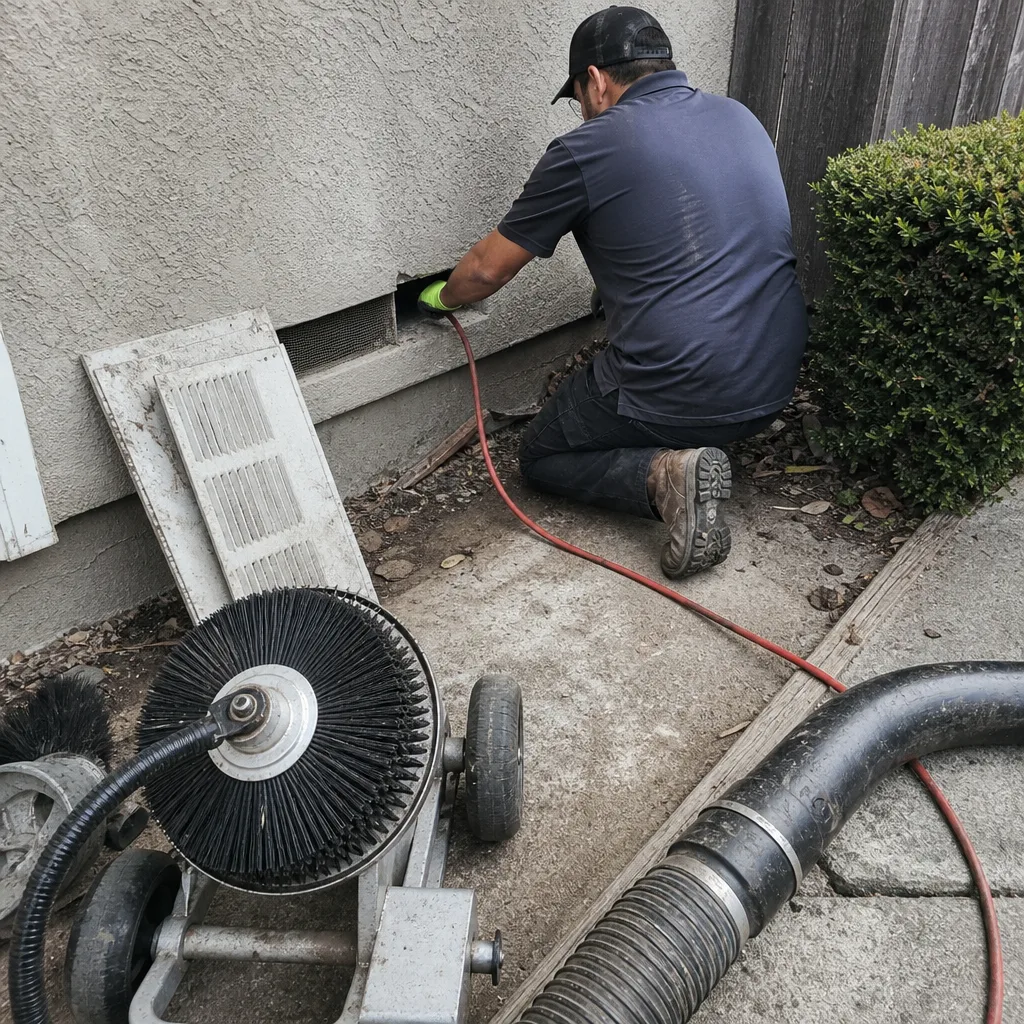
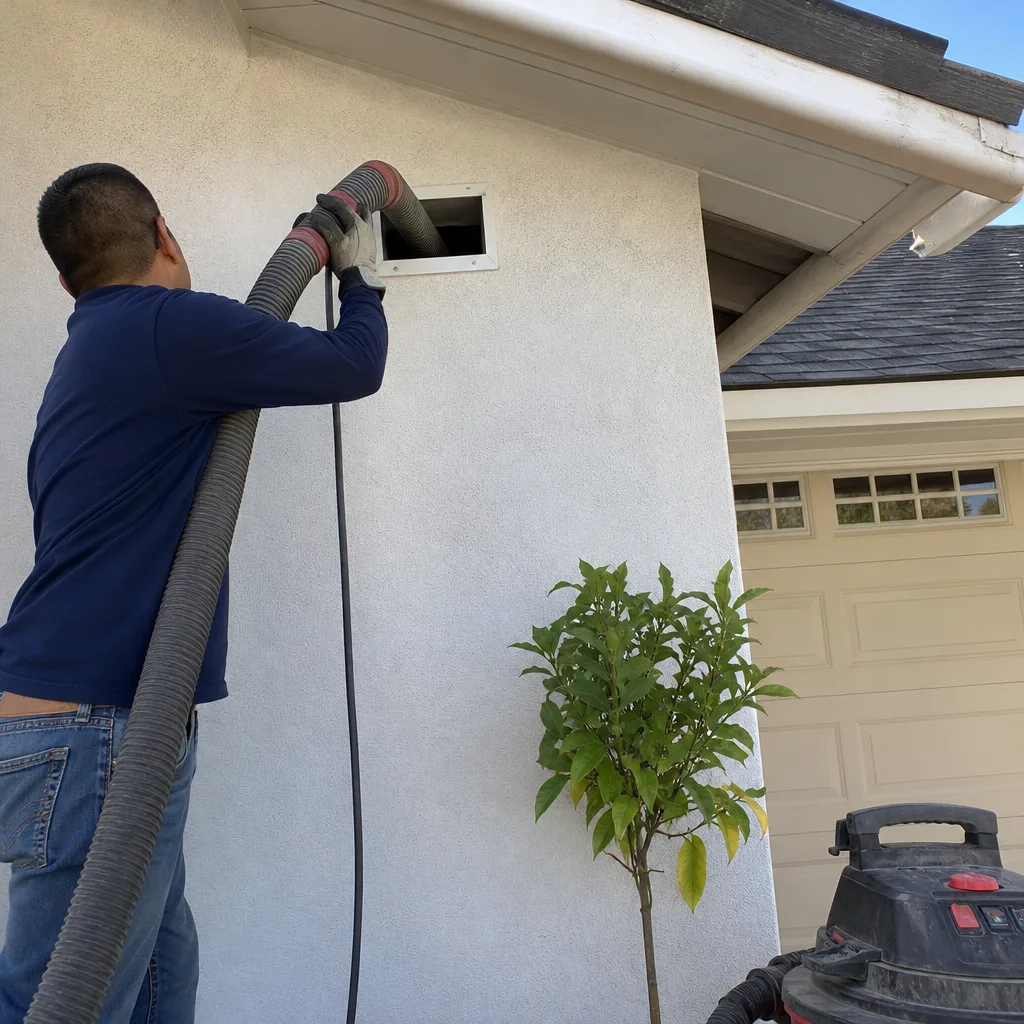
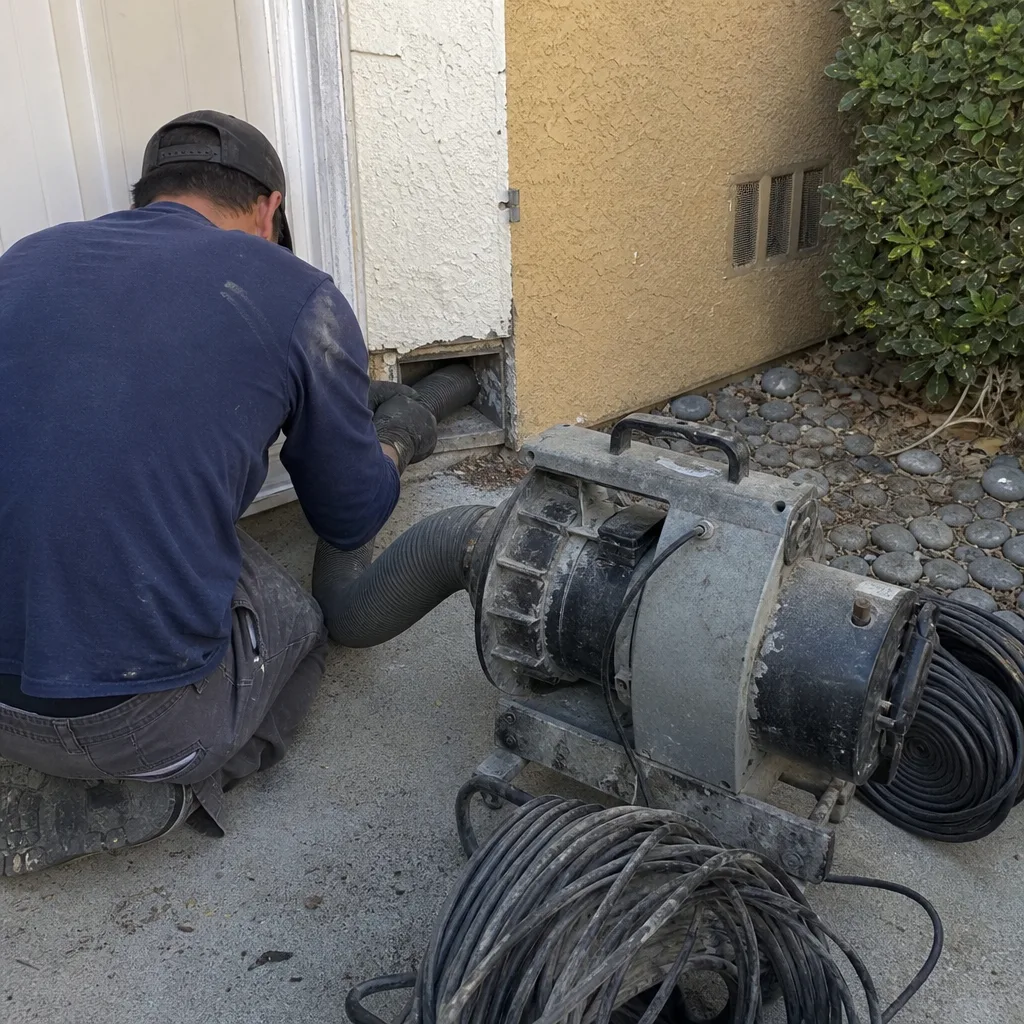
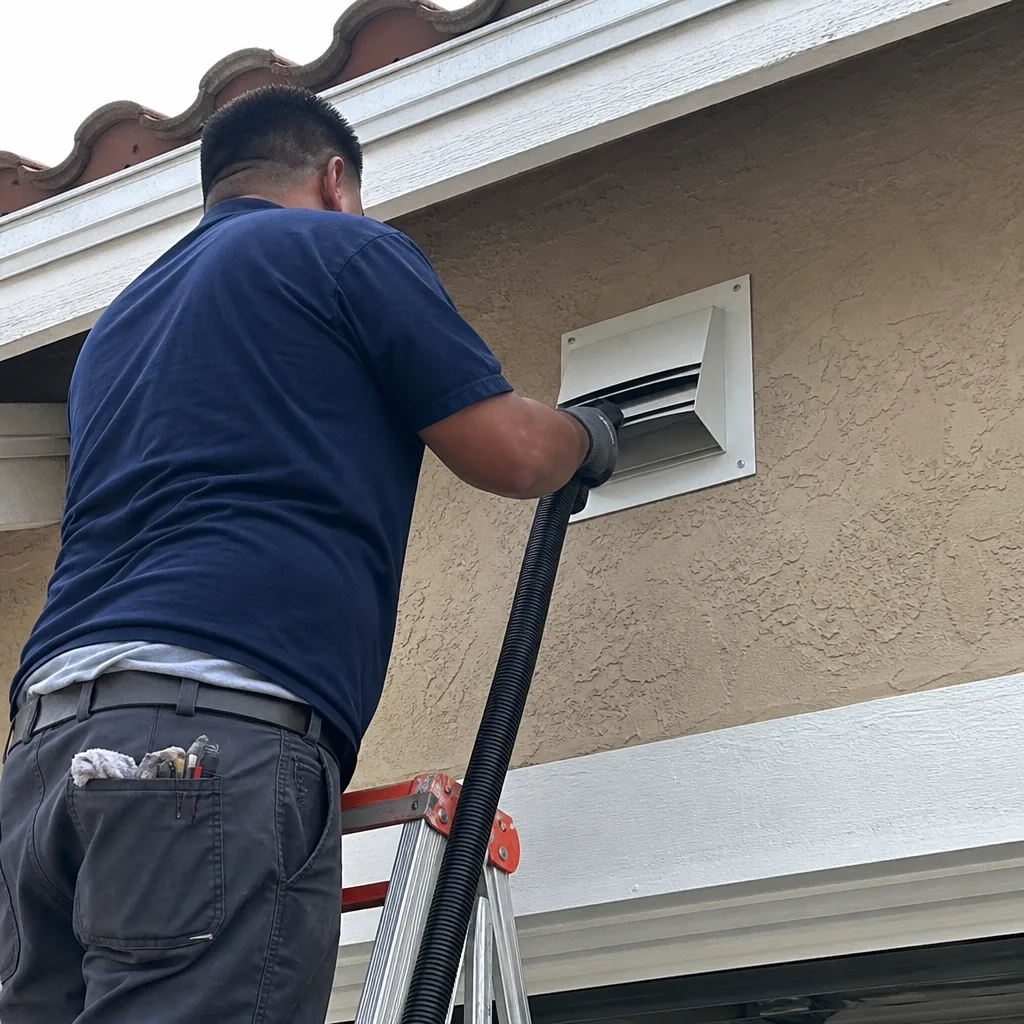
Whole-system duct and dryer vent check with before-and-after photos - you see exactly what came out of your vents
That "$99 whole-house special" is a bait ad - the real number appears once they are in your hallway, or the "clean" is a shop-vac at the register. We photograph the inside of your ducts before and after instead.
Air Duct Cleaning Warning Signs: A Mira Mesa Homeowner’s Reference Guide
A duct system that’s partially blocked or disconnected in the attic doesn’t fail loudly – it quietly shifts airflow balance so gradually that most homeowners adjust their thermostat habits around the problem without ever identifying the cause. I’ve watched Mira Mesa homeowners live with restricted systems for years, writing off rising SDG&E bills and stubborn bedrooms as quirks of an older house. This guide teaches you to read the specific patterns your ductwork leaves behind – at registers, on filters, in your monthly energy statement – and know which ones mean a scheduled cleaning versus something that needs attention this week. By the end, you’ll understand the difference between a dirty duct and a damaged one, and exactly what to do about either.
Quick Answer
The most telling air duct cleaning warning signs in Mira Mesa are room-by-room temperature differences that don’t match your thermostat setting, a fine gray-white dust film that returns within 48 hours of cleaning flat surfaces, visible debris streaking from supply registers, and a heating or cooling system that runs noticeably longer than it did two years ago to hit the same indoor temperature. Any two of these together in a Mira Mesa home usually means the ductwork is restricting airflow, leaking conditioned air into the attic, or recirculating trapped particulates. A professional camera inspection costs less than the energy waste most restricted systems generate in a single season.
Styles & brands we work with
- Whole-home duct cleaning
- Dryer vent cleaning
- Camera inspection
- Sanitizing & deodorizing
Table of Contents
- Room-by-Room Airflow Imbalance: Reading the Pattern
- The Odor Taxonomy of Duct Problems
- Interpreting HVAC Runtime Behavior as a Duct Signal
- Visual Indicators at Registers Most Homeowners Overlook
- Dust Patterns: What Returns and How Fast
- Urgent Response vs. Scheduled Inspection: Knowing the Difference
- Common Mistakes to Avoid
- When to Call a Professional
- Frequently Asked Questions
Room-by-Room Airflow Imbalance: Reading the Pattern
Start with your hands. Walk through your Mira Mesa home on an afternoon when the AC has been running for at least twenty minutes and hold your palm about six inches from each supply register. What you’re feeling for is not just “air comes out” – it’s relative force. One bedroom pushing air with noticeable pressure while the hallway register barely whispers air means the system is delivering unevenly. That’s not normal aging; that’s a diagnosable condition.
Three distinct airflow patterns point to three different problems:
- One or two rooms consistently weak while others are strong: This is usually a blockage. In Mira Mesa homes built in the 1970s and 1980s, we frequently find collapsed flex duct in the attic, crushed duct runs where someone stored boxes on top of them, or a damper that’s slipped closed. The fix is often straightforward cleaning and repair.
- Every room weak, system running constantly: This suggests a system-wide restriction, most commonly a badly loaded filter, a coil that’s never been cleaned, or return air that’s choked. Your equipment is working; the lungs of the house are obstructed.
- Strong supply air but rooms never reach temperature: This is the signature of disconnected or leaking ductwork. You’re conditioning your attic. You’ll usually see higher SDG&E usage as the first measurable symptom, often 15-30% above the same month last year without a weather explanation.
The Mira Mesa climate makes this more than a comfort issue. Our inland valley heat in August and September means a system running against a collapsed duct is running hours longer than it should. Over a single summer, that’s real money. And it accelerates wear on your blower motor and compressor, shortening equipment life.
The Odor Taxonomy of Duct Problems
Duct problems announce themselves by smell more often than by sight, but homeowners tend to dismiss those smells or mask them. Learning to categorize the odor is the single fastest diagnostic skill you can develop, because each category points to a specific underlying condition with a specific remedy.
- Musty or damp-earth smell, especially on system startup: This indicates moisture in the ductwork or in the materials surrounding it. In Mira Mesa’s dry climate this surprises people, but condensation forms inside insulated ductwork whenever humid air from our rare rainy periods meets cool duct surfaces. If the musty smell persists year-round, it’s worth looking at whether a bathroom exhaust is venting into the attic rather than outside, or whether the condensate drain is backing up. What this smell is telling you: organic material is staying damp somewhere in the system. Cleaning addresses the organic debris; repairing the moisture source prevents recurrence.
- Burnt-dust smell in the first few minutes of heating season: Dust settles on the heat exchanger during the months the furnace sits idle. When you fire it up the first cold evening, that dust burns off. A brief burnt-dust smell is normal; what’s not normal is that smell persisting for days. If it hangs around, you’re burning through an accumulated layer, which means a cleaning is overdue and the exchanger is running hotter than it should while coated in particulates.
- Chemical or plastic smell that strengthens with airflow: This one deserves attention. It can come from off-gassing insulation materials that have been disturbed, from pest treatment residue that found its way into the duct path, or from a foreign object that shouldn’t be there. We’ve extracted toys, construction debris, and in one memorable Mira Mesa attic, a nest of chewed insulation that had been worked into a duct seam. Chemical smells that don’t fade in a day or two warrant a camera inspection, quickly.
- Stale, closed-up smell that resolves when you open windows: This is the smell of recirculated indoor air with no meaningful fresh-air exchange. It’s often more of a ventilation design issue, but heavily loaded ductwork and dirty coils make it worse by giving airborne compounds more surfaces to hang onto. Cleaning the system gives you a cleaner baseline; then you can evaluate whether your home needs mechanical ventilation separately.
Each of these smells is a signal, not a nuisance. They map to specific conditions, and the right response is different for each. Treating everything with a scented filter is how problems compound for years.
Interpreting HVAC Runtime Behavior as a Duct Signal
Your thermostat already knows something is wrong. It’s just not telling you in words. The way your system cycles during a Mira Mesa summer day is a direct readout of the resistance it’s working against, and once you learn to read it, you’ll spot duct problems months before you’d notice dust or smell anything.
Here’s what we look at when a homeowner describes their system’s behavior:
- Longer cycles with no change in set point: The system runs longer to move the same amount of cooled air because the ducts are restricting flow or leaking air into the attic. If your AC used to cycle off at 2:00 PM in July and now runs until 4:30 PM at the same thermostat setting, that’s not the weather – that’s the ductwork asking for help.
- Short cycling at night but fine during the day: When the outdoor temperature drops, a restricted system may actually hit its target quickly because the heat load is low, then shut off, then start again twenty minutes later. The restriction is still there; it’s just being masked by low demand. This stop-start behavior is hard on compressors.
- System hunting – the thermostat reading fluctuates while the set point stays fixed: This often indicates stratification, the result of supply registers blowing unevenly and return air pulling unevenly. Rooms with different temperatures feed air back at different temperatures, and the thermostat can’t settle. Duct leakage and blockage both contribute.
- One zone of the house that requires a separate thermostat strategy: If you’ve learned to close the door to the back bedroom in summer because it stays hot, or you leave a heater running in one room in winter, you’ve manually compensated for an airflow problem. We see this pattern constantly in Mira Mesa’s older single-story ranchers where the original duct layout was barely adequate when new and is now further compromised.
The practical takeaway: track your runtime if your thermostat logs it. Most modern smart thermostats do. A trend of increasing minutes of runtime per degree of outdoor temperature is the single most objective early warning signal you can have. It tells you the system is losing efficiency, and ductwork is the first place to look.
Visual Indicators at Registers Most Homeowners Overlook
The registers themselves tell a story if you actually bend down and look at them. Most people glance at a register and see “white metal thing, some dust maybe.” A closer look reveals specific visual patterns that map to specific duct conditions.
Here’s what to look for on the louvers, the wall around the register, and the floor beneath it:
- Streak patterns, not a uniform film: Uniform dust film is every house; what’s diagnostic is streaking. Dark streaks radiating outward from the register on the wall or ceiling indicate that air is hitting the register with enough force to direct particulates in specific paths. That force usually means the register is on a high-velocity branch while other branches are restricted, or the register itself is partially closed while the system is pushing against it. Either way, airflow is imbalanced.
- Discoloration geometry: Look at the shape of the stained area. A rectangular shadow matching the register dimensions means dust is settling out of air as it exits – normal, just slow accumulation. Streaks extending diagonally from one side suggest the register is blowing sideways, not outward. Circular soot-like patterns near the center can indicate condensation staining or, in warm months, mold activity on the register face itself.
- Debris texture: Fine, talc-like white-gray powder is the classic Mira Mesa dust profile – we have calcium-heavy soils east of the 15 and dry particulates from canyon winds. It’s powdery, light, and easily disturbed. What you don’t want to see: gritty, sandy residue that feels abrasive between your fingers. That’s construction debris or degraded duct liner material, which is a different problem than surface dust and points to ductwork deterioration.
- Moisture rings or rust on the register face: Register faces are steel. If you see rust staining, water has been condensing on that surface. That means humid air is moving through a cool duct or the register is in a location with a microclimate problem like a bathroom. Rust on multiple registers across the house points system-wide, not local.
These are not cosmetic. They’re measurements you can take with your eyes in under five minutes, and they’ll tell you whether what’s circulating through your ducts is ordinary Mira Mesa dust or something breaking down inside the system.
Dust Patterns: What Returns and How Fast
Everyone who lives in Mira Mesa lives with dust. The canyons and the dry air guarantee it. So the question isn’t whether you have dust – it’s whether your ductwork is generating or recirculating dust at a rate that tells you something about the system’s condition.
The useful test is a timed one:
- Clean all horizontal surfaces thoroughly in the room you spend the most time in. Use a clean, damp microfiber cloth and work it into corners.
- Note the date. Don’t do this in September unless you’re prepared for a windy month; ideally do it in May or October when wildfire activity and Santa Ana winds are lower.
- Check again in 48 hours. A fine, translucent film is normal anywhere in Mira Mesa. What’s diagnostic is a visible white-gray layer that has accumulated in two days.
- Compare rooms. If the master bedroom films over in 48 hours but the living room stays clean for a week, that room’s supply branch is pulling in attic air or the return path is pulling across a dusty surface. Different rates mean different duct conditions.
This is the test we’d run before recommending an Air Duct Cleaning in Mira Mesa. It distinguishes a house that’s simply located in a dusty climate from one whose ductwork is actively feeding that dust into the living space. The first benefits from cleaning; the second requires it, and possibly repair.
One other marker: check your return air grille. If it’s pulling hard enough to hold a sheet of paper against the louver, that’s normal. If it’s also accumulated a felt-like dust mat that you can peel off, your return path is loading the filter faster than it should. That means return air is being drawn from a dusty location – often an attic with bypassed or disconnected return duct. The home’s static pressure rises, blower efficiency drops, and your filter plugs faster. All from a leak you can’t see without a camera.
Urgent Response vs. Scheduled Inspection: Knowing the Difference
Not every warning sign needs a same-week response. Some need a scheduled appointment at your convenience. But a few need attention fast, and the difference matters because it changes how quickly you should act and how you should frame the problem for whoever you call.
Schedule a professional inspection soon – but not an emergency – when:
- Dust returns within days of cleaning flat surfaces, but no one in the household has worsened allergies.
- One or two rooms are consistently 3-5 degrees off from the thermostat setting in peak cooling season.
- You see streaking at registers or the register faces have accumulated a visible dust crust.
- Your system runs longer than it did two summers ago, but you haven’t seen an unusual energy bill spike.
These are operational indicators. The system is losing efficiency and circulating particulates, but the immediate risk to health and safety is low. A scheduled appointment within a couple of weeks is the appropriate response, and an Air Duct Repair in Mira Mesa evaluation can be folded into the same visit if needed.
Treat as urgent – call within days – when:
- A chemical or fuel-like smell comes from the registers when the system runs. Turn the system off and investigate. Carbon monoxide detectors should be functional regardless, but this is a “don’t wait” signal.
- Visible mold growth on the register face or inside the first reachable inch of the duct. This is a moisture problem, and it doesn’t self-resolve in a dry climate unless the moisture source is removed.
- A member of the household experiences respiratory symptoms, headaches, or sinus irritation that improve when they leave the house and worsen on return. This is a health-risk indicator, not an operational one.
- You find evidence of pests – droppings, nesting material, gnawed duct insulation – at registers or in the attic around duct runs. Rodent activity in ductwork is both a contamination issue and a damage issue. Chewed flex duct leaks air and pulls attic contaminants into the supply stream.
The distinction is health versus efficiency. Operational inefficiency costs money and comfort; health-risk indicators cost more than money. Knowing which category you’re in tells you how fast to act and what kind of contractor you need on the phone.
Common Mistakes to Avoid
- Closing registers in unused rooms to “redirect” airflow. Your blower doesn’t know the register is closed. It pushes the same air volume against higher resistance, which raises static pressure and increases duct leakage throughout the system. In a Mira Mesa summer, this is actively counterproductive. The right fix is balancing the system, not choking it.
- Replacing the filter as the first and only response to every symptom. A clogged filter is a real cause of restricted airflow, but it’s one of about seven common causes. If you’ve replaced the filter and the symptom persists for more than a week, the filter wasn’t the problem. What you’re doing now is studying the problem while it costs you money.
- Fogging or masking odors with scented products. A duct odor is a signal. Masking it with vent clips or scented filters means you’re treating the smell while the source – moisture, debris, or a contaminant – remains. By the time the smell overwhelms the masking, the underlying condition has had months to worsen.
- Assuming a clean-looking register means clean ductwork. The register is the last six inches of a run that may stretch fifty feet through an attic you’ve never inspected. The inside of the duct is where the problem lives. We’ve seen registers that look pristine connected to duct runs that were carrying visible debris loads.
- Delaying an inspection because the house is “newer.” Mira Mesa has plenty of homes built in the last twenty years, and construction debris in the ductwork is more common in newer builds than in older ones. Drywall dust, sawdust, and dropped fasteners from the building phase live in brand-new systems. Age of home is not a reliable predictor of duct condition.
- Accepting a cleaning quote without a camera inspection. Cleaning is one operation. Repair is another. If a contractor quotes you a flat cleaning price without looking inside the ducts with a camera first, they’re pricing blind. You need to know whether you’re paying for cleaning, repair, or both – and only a visual inspection answers that. We always inspect before we quote.
When to Call a Professional
You should call a duct specialist when a pattern repeats across multiple indicators: airflow imbalance plus dust return, or persistent odor plus longer runtimes. One isolated symptom can have several explanations; two or three together usually point to the duct system with enough confidence to justify an inspection. If anyone in the home is reacting physically – allergy symptoms that track with the HVAC cycling, headaches in specific rooms, sinus irritation at night – don’t wait for confirmation. Health signals get priority over mechanical indicators. Air Duct Cleaning Mira Mesa offers free estimates in Mira Mesa – call (833) 734-7428 to schedule an inspection with a camera, not a guess.
Frequently Asked Questions
You need cleaning if you see visible dust payload on register faces, dust that returns to cleaned surfaces within 48-72 hours, streaking patterns around supply registers, or a persistent burnt-dust smell during heating season in your Mira Mesa home. Any single one of these warrants a camera inspection; two or more together mean the system is actively recirculating particulates. Call (833) 734-7428 for a free estimate and we’ll inspect before we quote.
Room-by-room temperature gaps of more than 3-5 degrees usually indicate a duct problem – a collapsed flex run, a closed damper, a disconnected branch, or a return path that’s pulling unevenly. In Mira Mesa’s summer heat, even a 20% airflow reduction in one branch translates to a noticeably uncomfortable room. A camera inspection identifies the exact restriction and whether cleaning, repair, or both will solve it.
Dust from the ducts is dust that was inside the system and is now being blown into your rooms. It appears shortly after the HVAC starts, concentrates near supply registers, and returns within days of cleaning. Dust in the air is ambient outdoor dust entering through windows, doors, and envelope leaks. The register-streak pattern and the 48-hour return test are the two most reliable ways to tell them apart in a Mira Mesa home.
Yes. Restricted airflow makes your blower work harder and your system run longer to hit the same set point. Restricted return paths raise static pressure, which reduces delivered airflow per watt consumed. A system running twenty to thirty minutes longer per day in peak Mira Mesa cooling season adds up quickly. Homeowners frequently see the cost of cleaning recovered within a single season.
Most Mira Mesa homes benefit from professional cleaning every 3-5 years. Homes with pets that shed heavily, homes near the canyons where wind-blown particulates are higher, and homes with recent construction or renovation work may need cleaning sooner. The best signal is the dust-return test: if surfaces film over within 48-72 hours after cleaning, your interval should be shorter.
Choose a company that does a camera inspection before quoting, uses professional-grade negative-pressure equipment rather than consumer shop vacuums, and can repair ductwork if the inspection finds damage. Cleaning alone doesn’t fix a disconnected branch or a collapsed flex run. Ask about the equipment by brand – professional systems like Nikro and Abatement Technologies indicate a contractor who takes extraction and containment seriously. Call (833) 734-7428 and ask us anything about our process.
The Bottom Line
Duct warning signs are rarely dramatic, but they are specific. The patterns repeat: a room that won’t hold temperature, a dust film that returns in days, a register with directional streaking, a system that runs longer each summer. Individually, these are easy to rationalize as normal aging. Together, they’re a lead-pipe diagnosis. The good news is that the right response is straightforward: a camera inspection that tells you exactly what’s in the ducts and whether cleaning, repair, or both will resolve it. You don’t need to guess, and you don’t need to replace anything blindly. You need a specialist who looks before quoting. That’s what we do.
Written by the team at Air Duct Cleaning Mira Mesa Home, serving Mira Mesa since 2011. We specialize in air duct cleaning, dryer vent cleaning, and air duct repair – one focused trade, done with professional equipment.
See the difference
 Before
 After
 Before
 After
 Before
 After