
Last updated November 2, 2026
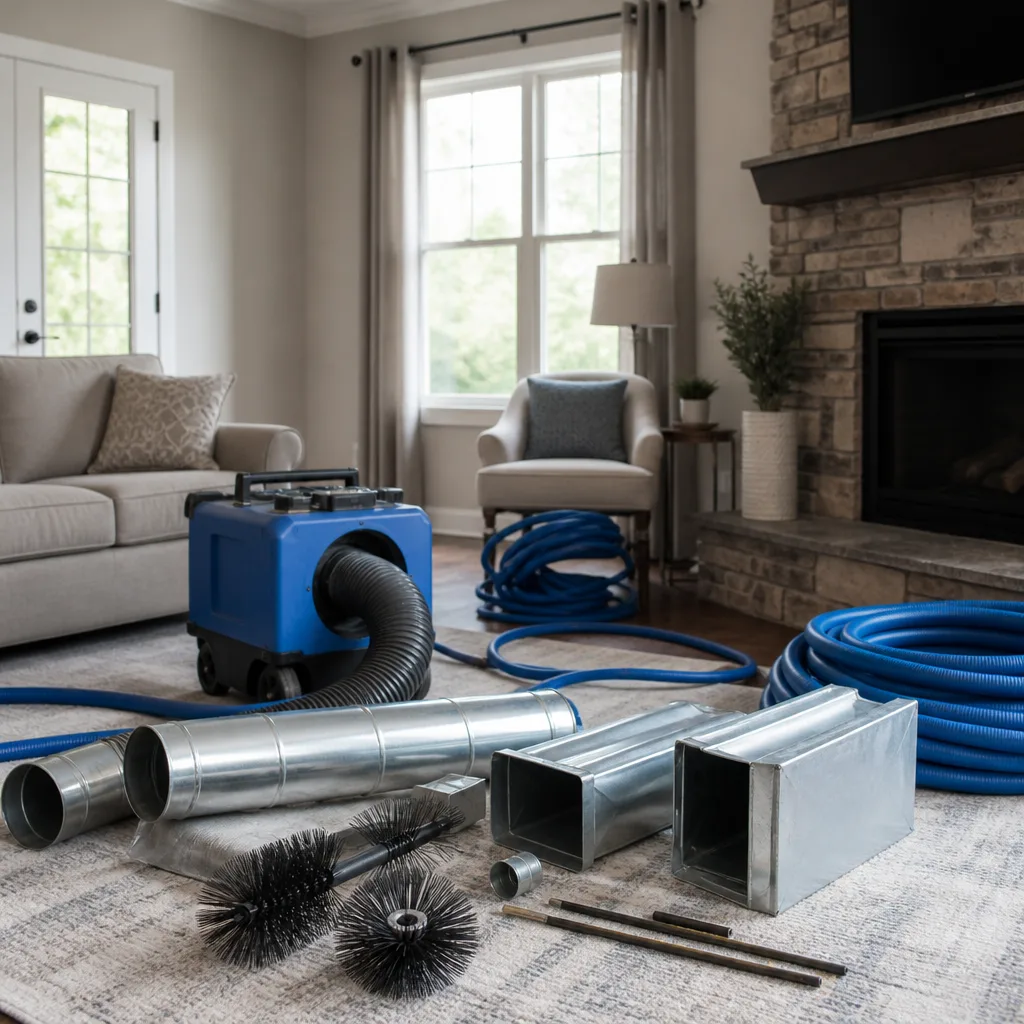 Whole-home duct cleaning
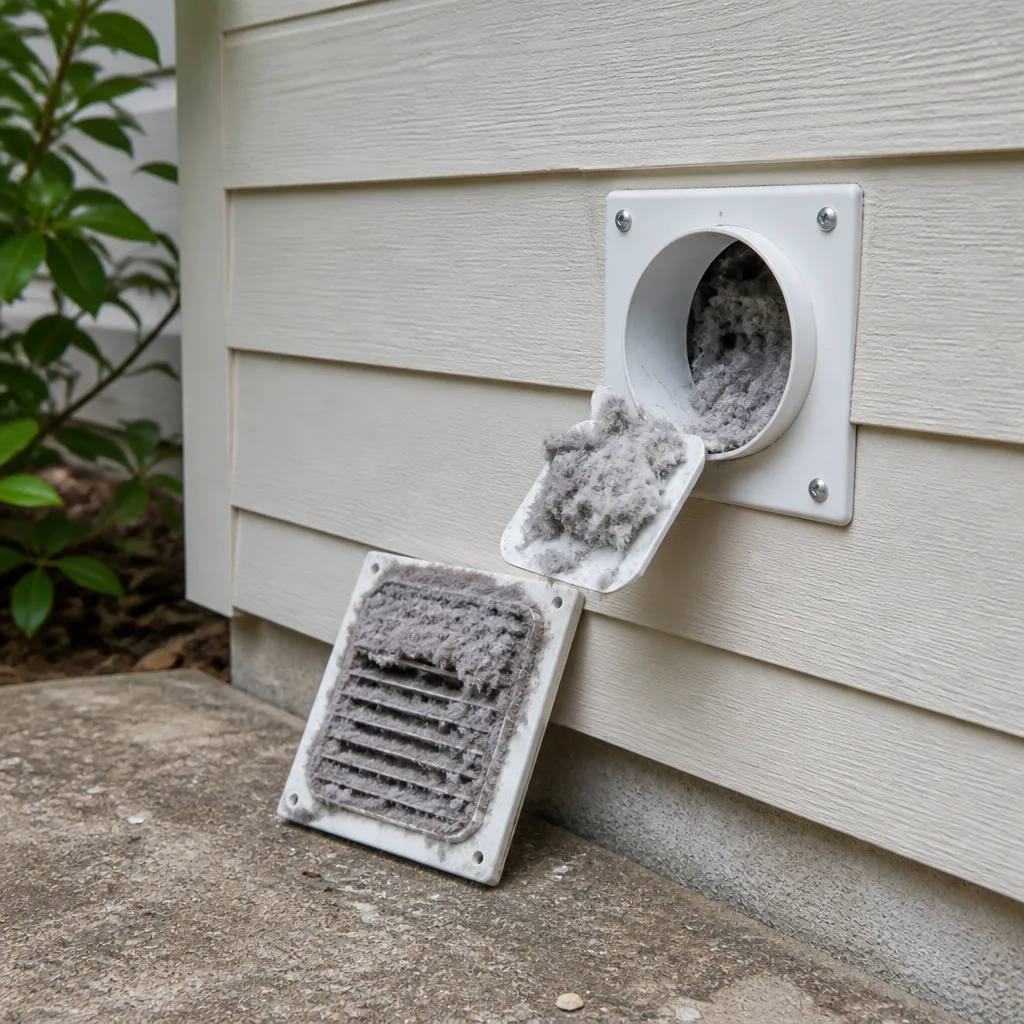 Dryer vent cleaning
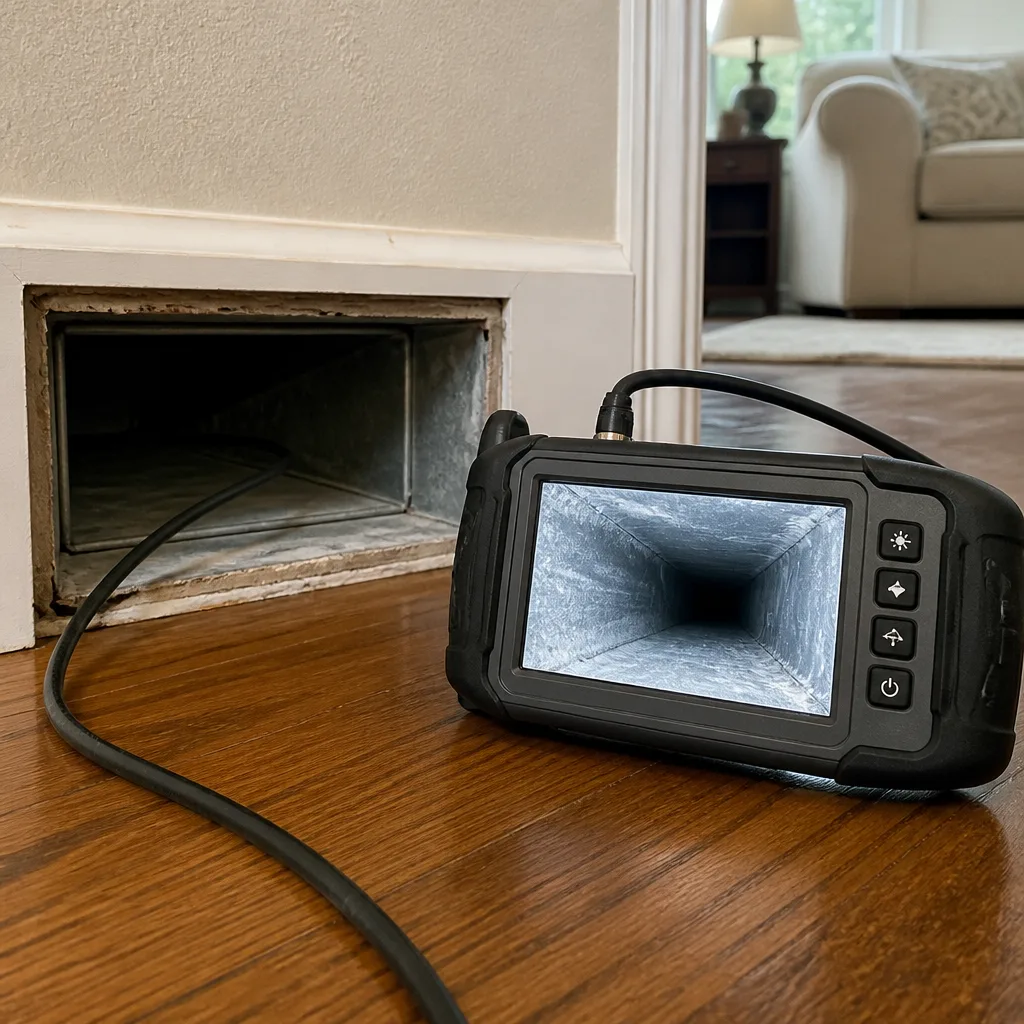 Camera inspection
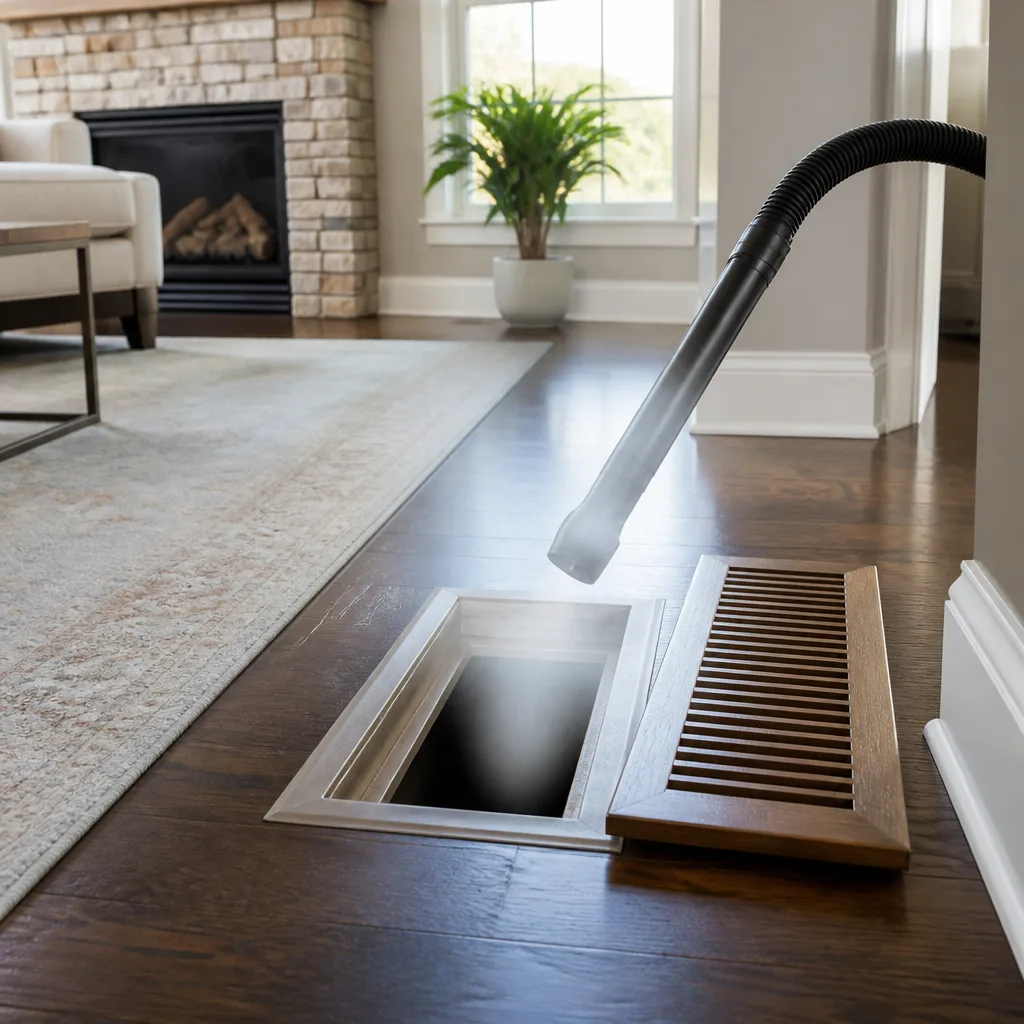 Sanitizing & deodorizing
Whole-system duct and dryer vent check with before-and-after photos - you see exactly what came out of your vents
That "$99 whole-house special" is a bait ad - the real number appears once they are in your hallway, or the "clean" is a shop-vac at the register. We photograph the inside of your ducts before and after instead.
DIY vs Professional Air Duct Cleaning: The Mira Mesa Homeowner’s Decision Guide
Every DIY duct cleaning tutorial online shows the same setup: a drill-attached brush kit and a shop vacuum, maybe a phone camera taped to a pole. What none of them show is a CFM comparison between that equipment and professional-grade negative air machines. That omission matters, because the moment you see the airflow numbers side by side, the DIY versus professional debate in Mira Mesa essentially ends. This guide explains what that spec gap actually means for the dust in your ducts, what DIY maintenance can legitimately accomplish in your Mira Mesa home, and where the boundary lies between surface tidying and our Air Duct Cleaning services that provide true source removal.
Quick Answer
DIY duct cleaning in Mira Mesa can remove visible debris from the first few feet of your registers and return vents, but it cannot clean the majority of your duct system. Professional air duct cleaning uses negative-pressure extraction equipment pulling 2,000 to 4,000 CFM through your entire duct network, which no consumer vacuum can replicate regardless of effort, time, or attachment choice. For a deeper look at this topic, see our How to Hire an Air Duct Cleaning Contractor in Mira Mesa: A Step-by-Step Guide. The practical answer: DIY is maintenance, professional is cleaning, and the two serve different purposes.
Styles & brands we work with
- Whole-home duct cleaning
- Dryer vent cleaning
- Camera inspection
- Sanitizing & deodorizing
Table of Contents
- The Physics Problem: Why Suction Is the Whole Conversation
- What DIY Register and Filter Maintenance Actually Accomplishes
- When DIY Attempts Make Ducts Worse
- What Professional Negative-Pressure Cleaning Actually Does
- Cost Comparison: DIY Kits vs Professional Service in Mira Mesa
- What a Camera Shows: DIY Results vs Professional Extraction
- How to Use DIY Observation to Extend Time Between Professional Cleanings
- Common Mistakes to Avoid
- When to Call a Professional
- Frequently Asked Questions
The Physics Problem: Why Suction Is the Whole Conversation
Air duct cleaning is not a scrubbing problem. It’s an airflow problem. The dust, debris, and particulate matter inside your Mira Mesa ductwork sits along the interior walls of channels that can run 20, 40, or 60 feet from your furnace to individual rooms. To remove that material at the source, you need enough negative pressure to pull air through the entire length of the duct run at a velocity strong enough to dislodge and carry debris back to a collection point. That requires sustained airflow measured in thousands of cubic feet per minute, or CFM.
A standard consumer shop vacuum generates between 100 and 150 CFM at the nozzle. A dedicated dust collector might reach 400 CFM. Professional duct cleaning systems from manufacturers like Rotobrush and Nikro operate in the 2,000 to 4,000 CFM range. That is not a marginal difference. It is a 10x to 30x difference in air-moving capacity, and it means the professional system pulls air through the entire duct network simultaneously, not just through the six inches of duct immediately behind the register you are working on.
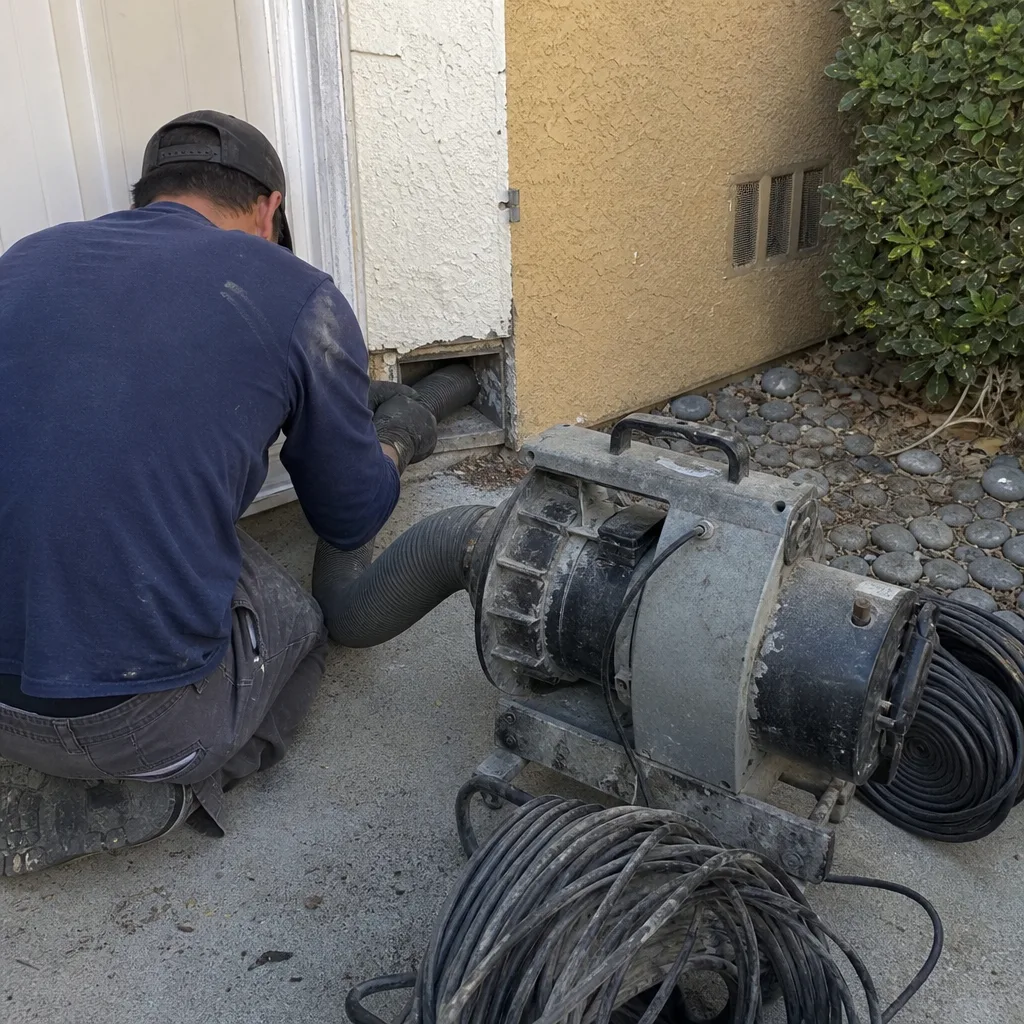
When we clean ducts in Mira Mesa homes, the negative air machine connects to the main trunk line near the furnace. It depressurizes the entire system. Then we run agitation tools through each branch line from the register side. Debris dislodged by the agitation gets pulled back toward the main trunk by the negative pressure and captured in the collection system. The physics only works because the machine is moving enough air to create that pull across the full system. A shop vacuum at one register cannot create system-wide airflow. It creates local airflow, and local airflow only addresses local debris.
This is why technique does not save the DIY approach. No amount of patience, careful brush work, or clever attachment design changes the CFM ceiling of consumer equipment. The dust beyond the reach of your register is not stubborn; it is physically inaccessible to your equipment’s airflow capacity.
What DIY Register and Filter Maintenance Actually Accomplishes
None of this means homeowner maintenance is worthless. It means it has a specific, honest scope. There are tasks you can and should do yourself in your Mira Mesa home that genuinely improve air quality, reduce system strain, and extend the time between professional cleanings. They just do not replace professional cleaning.
Here is what DIY work legitimately accomplishes:
- Register and grille cleaning: Removing the visible dust, hair, and debris from the register covers and the first several inches of accessible duct. This is surface-level work, but it stops larger particles from recirculating through your living space.
- Return vent maintenance: Return vents pull air into your system and accumulate significant dust. Cleaning the register and vacuuming the accessible return cavity reduces the load entering your filter.
- Filter replacement: The single highest-impact DIY task. A clean filter protects your equipment, reduces recirculated dust, and maintains proper airflow. In Mira Mesa’s dry summer months, filters often need checking more frequently than the standard 90-day interval.
- Visual inspection: Shining a flashlight into accessible duct openings to check for visible moisture staining, pest activity, or large debris accumulation. This observation gives you useful information about when professional intervention is warranted.
- Furnace cabinet cleaning: Vacuuming the blower compartment area and interior cabinet surfaces, where accessible, with the system powered off. This prevents accumulated dust from entering the supply side of the airflow.
These tasks sit entirely within the capabilities of consumer equipment because they address surfaces within direct reach of the vacuum or brush. The register, the filter slot, the visible return cavity. That is maintenance-level work, and it matters. But none of it reaches the main trunk line, the branch laterals, or the far end of supply runs where the majority of your duct surface area lives.
When DIY Attempts Make Ducts Worse
There is a category of DIY duct work that does not just fail to clean; it actively damages. We have seen the aftermath of these situations in Mira Mesa homes, and some of them create repair bills far beyond the cost of a professional cleaning.
Agitation Without Capture
The most common mistake is running a brush or rod through ductwork without adequate negative pressure on the other end. What this does is dislodge settled debris from the duct walls without carrying it out of the system. That dust does not disappear. It becomes airborne inside the duct channel, redistributes, and eventually cycles back into your living space when the HVAC system runs. In some cases, aggressive brushing actually pushes debris deeper into the duct, packing it into bends and transitions where it is harder to remove. You have not cleaned the ducts; you have rearranged the dirt in ways that make professional extraction more difficult later.
Dislodging Flex Duct Connections
Many Mira Mesa homes built in the 1990s and 2000s use flexible duct runs from the main trunk to individual rooms. Those flex sections connect to rigid ductwork with zip ties, metal bands, or tape. When a homeowner pushes a brush or camera rigidly through a flex run, particularly around bends, the physical pressure can separate that connection. A separated flex junction silently leaks conditioned air into your attic or crawlspace. You lose efficiency, you gain temperature imbalances, and you may not know it happened for months. The repair requires accessing the attic or crawlspace, which is why professional duct repair exists as a distinct service category.
Duct Liner Damage
Older ductwork in some Mira Mesa homes includes interior insulation liner. That liner is fragile. Aggressive DIY brushing can tear it, and torn liner material then circulates through the system and clogs filters, coils, and registers. Damaged liner may also expose the fiberglass material underneath, which is not something you want in your indoor air stream. Professional cleaning uses agitation tools designed to contact duct walls without shredding liner material, and camera inspection verifies liner condition before and after the work.
Pest Debris Without Protection
If rodents or insects have been in your ductwork, the droppings and debris they leave behind are not safe to handle without proper filtration. Abatement Technologies negative air machines with HEPA filtration are standard on professional remediation projects for that exact reason. A shop vacuum without HEPA filtration recirculates the finest particles back into your room air. What looks like a simple vacuuming job can become an indoor air quality event.
What Professional Negative-Pressure Cleaning Actually Does
Understanding the professional process helps you evaluate whether a contractor is doing real cleaning or surface maintenance. When we perform air duct cleaning in Mira Mesa, the process follows a specific containment-and-extraction sequence, and the order matters as much as the equipment.
- System assessment and access: We locate the main trunk line, identify all branch runs, note access points, and check filter and blower condition. This tells us where the negative air machine connects and how many registers require service.
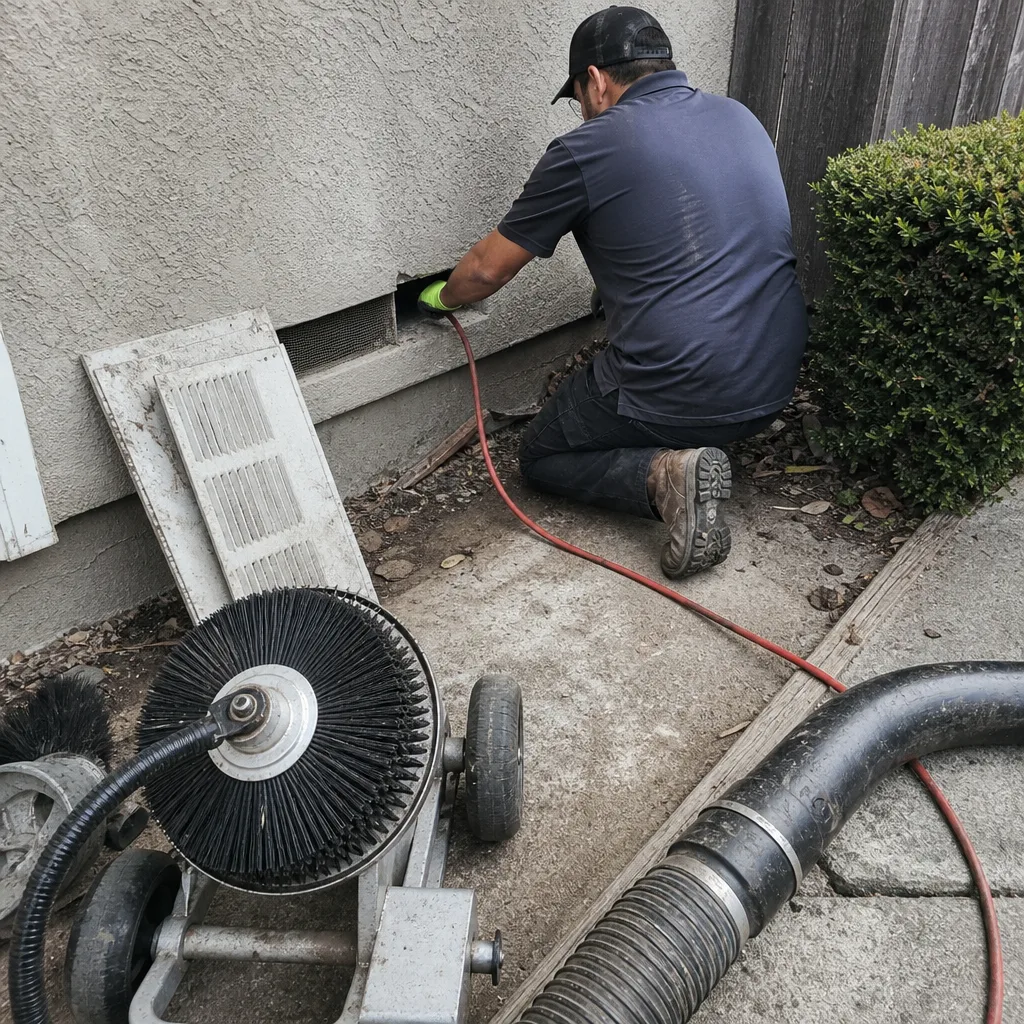
- Containment setup: The negative air machine connects to the main trunk near the furnace. This creates a sealed pathway from every branch run back to the collection point. In some cases, Abatement Technologies air filtration and containment equipment runs alongside the extraction system, particularly when we are dealing with significant particulate load or pest-related debris.
- System depressurization: The machine powers on and pulls the entire duct system into negative pressure. This is the critical step. Every register becomes an intake point rather than an exhaust point. Debris cannot escape into your home during agitation because airflow is flowing inward at every opening.
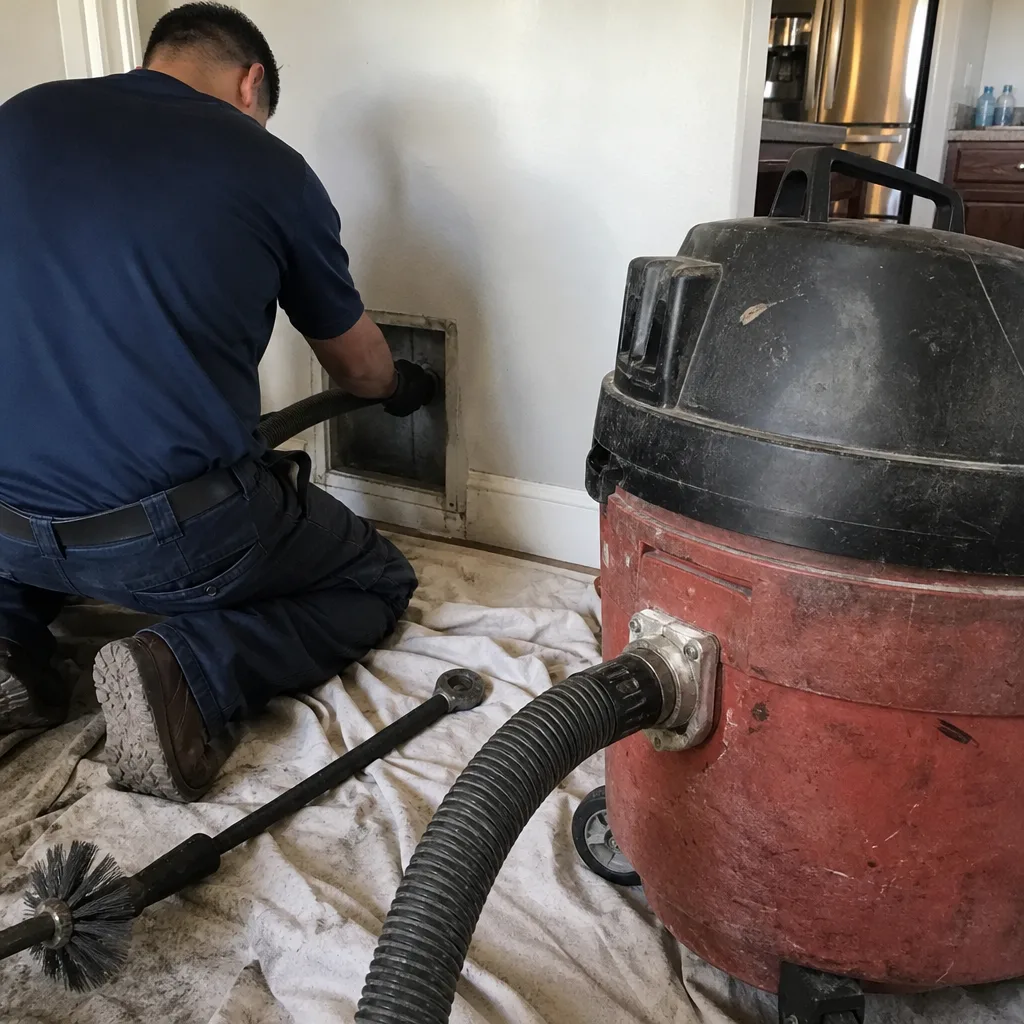
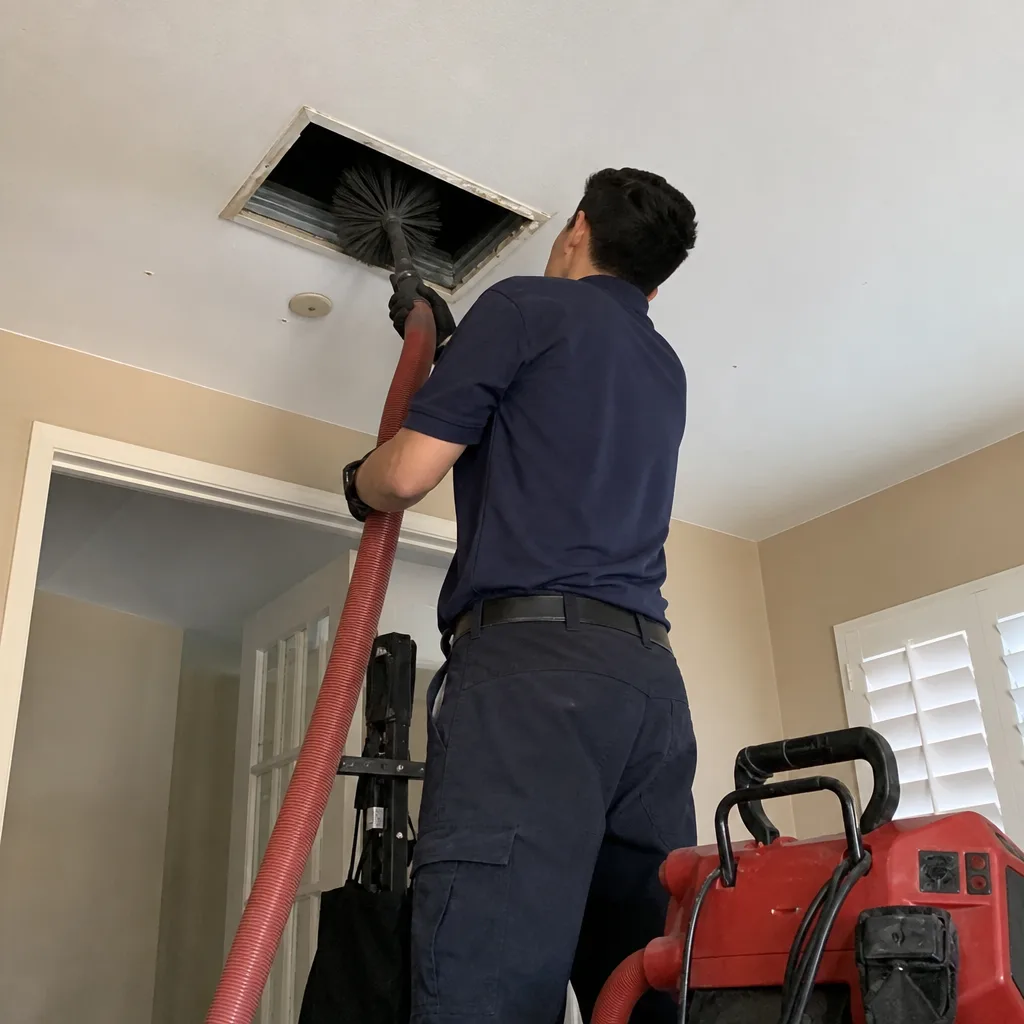
- Agitation and source removal: With the system under negative pressure, we work through each branch run from the register side. Rotobrush or Nikro agitation tools dislodge settled debris from the duct walls. The negative pressure pulls that debris immediately back toward the main trunk and into the collection system. The dislodged material has no opportunity to redistribute because the airflow is carrying it out.
- Branch-by-branch verification: Camera inspection confirms each run is clear before moving to the next. This is the output difference between maintenance and cleaning: we can show you the duct interior before and after each branch run.
- System restore and final check: The equipment disconnects, access points seal, and the system runs through a normal cycle. A final walkthrough covers what was found, what was removed, and any recommendations for duct repair or future maintenance.
For homeowners who have already tried a DIY cleaning and are not satisfied with the results, this process explains the gap. The DIY approach addressed the accessible surfaces. The professional process addressed the entire duct channel under extraction conditions.
Cost Comparison: DIY Kits vs Professional Service in Mira Mesa
The cost question deserves a straight answer. DIY duct cleaning kits are not expensive. Professional service is not free. But comparing the purchase price of a brush kit to the cost of professional cleaning misses the point, because the purchases buy different things.
What DIY Spending Buys in Mira Mesa
- Basic brush and rod kit: $25 to $60 at any hardware store or online retailer. A drill-driven brush with flexible rod sections.
- Inspection camera: $40 to $120 for a basic borescope that connects to your phone. Useful for seeing the first few feet of duct, awkward to push through full runs.
- Vent register cleaning tools: $15 to $40 for microfiber tools designed to clean the register and immediate area.
- Filter supplies: $10 to $40 per filter depending on MERV rating and size. Ongoing cost regardless of who cleans the ducts.
Total realistic DIY investment: $100 to $260, most of it reusable. That buys register maintenance, filter replacement, and the ability to inspect accessible duct openings.
What Professional Spending Buys
Professional air duct cleaning for a typical Mira Mesa single-family home, depending on system size and access complexity, generally runs several hundred dollars for the full system. That price includes the negative-pressure extraction equipment, the agitation work, the containment setup, camera verification throughout the process, and the labor of a technician who does this work daily. It also includes something the DIY kit cannot provide: the airflow physics to clean the full duct channel, not just the first few feet.
The honest framing is not that professional service is expensive. It is that DIY kits are cheap for a reason. They address a small percentage of the duct surface area. If your goal is cleaner air throughout the home and a meaningful reduction in recirculated dust, the question is not which option costs less. The question is which option actually cleans the ducts.
What a Camera Shows: DIY Results vs Professional Extraction
The most useful way to understand the output difference is to compare what a camera reveals in each scenario. This is not a theoretical exercise; it is the verification step we perform on every cleaning in Mira Mesa.
After a DIY Attempt
Homeowners who have done a thorough DIY cleaning typically see clean register covers and clean visible duct openings. A camera pushed a few feet into the duct from the register often shows clear walls in that immediate section. But push the camera further, past the first bend or transition, and the picture changes. The main trunk line shows a consistent dust film across the walls. Branch runs show accumulated debris at floor level, particularly where the duct runs horizontally. Flex sections show particulate settled into the ridges. The DIY cleaning did not fail; it simply never reached the material beyond the accessible opening.
After Professional Negative-Pressure Extraction
Professional cleaning should leave the duct interior visibly changed along the entire length of each run. The camera view after extraction shows bare metal or bare flex interior, with the dust film removed and no debris accumulation at floor level. The trunk line should look structurally clean, not just surface-tidied. We show camera views of every branch run before and after the work, which gives you verification that the cleaning reached the full system rather than the sections visible from your registers.
This camera verification is the single most important quality checkpoint in professional duct cleaning. If a contractor cannot show you before-and-after interior views of the full system, you cannot confirm the work happened. Homeowners who have been through a disappointing cleaning elsewhere often tell us the camera evidence was the missing piece. Full-service specialists include it as standard practice.
How to Use DIY Observation to Extend Time Between Professional Cleanings
The most effective DIY approach treats your own maintenance as a complement to professional cleaning, not a replacement. For ongoing care tips, see our Seasonal Air Duct Cleaning Care for Mira Mesa: Year-Round Homeowner’s Guide. Your job is observation, light maintenance, and filter discipline. The professional’s job is source removal. Here is the DIY workflow that maximizes value in Mira Mesa’s climate conditions.
- Inspect every register monthly: Remove the covers, vacuum them clean, and look into the accessible duct opening. Note any visible dust accumulation, moisture staining, or unexpected odor. A few minutes per month gives you a baseline understanding of your system’s condition.
- Check and replace filters on schedule: In Mira Mesa, where the HVAC system often runs heavily through summer, a 90-day interval may not be enough. Check monthly, replace when visibly loaded or airflow drops. Clean filters reduce the debris load entering the system and extend the time between professional cleanings.
- Vacuum accessible return cavities quarterly: The return side accumulates the most visible dust because it pulls air into the system. Vacuuming what you can reach reduces the load on the filter and the duct interior behind it.
- Watch for early warning signs: Increased dust settling on furniture shortly after cleaning, visible dust blowing from registers when the system starts, musty odor during operation, or unexplained allergy symptoms that spike during HVAC cycles. These indicate duct-side contamination that observation and light maintenance cannot address.
- Schedule professional cleaning when observation hits its ceiling: When the signs above appear, or when several years have passed since the last professional cleaning, the full-system extraction becomes the right call. Your continued observation means you are not guessing about whether the cleaning is needed; you can point to specific evidence.
This workflow respects the boundary between what you can do and what the equipment physics requires. It keeps your system cleaner between professional visits, and it gives you objective information about when those visits should happen.
Common Mistakes to Avoid
- Using a leaf blower or air compressor to “blow out” ducts. This does not remove debris from the system; it redistributes it inside the duct network and forces fine particulate into the living space. Professional cleaning uses negative pressure to pull debris out, not positive pressure to blow it around.
- Drilling holes in ductwork to access hidden sections. Unauthorized access holes, improperly sealed, become air leaks that reduce system efficiency and pull attic or crawlspace air into your conditioned space. Professional access points are cut, used, and sealed with proper materials.
- Running a shop vacuum on the supply side while the system blower runs. This pushes disturbed debris through the blower, coil, and into living areas. The HVAC system must be powered down before any cleaning work begins.
- Assuming register cleaning equals duct cleaning. Clean registers improve appearance, but the duct run behind them is where the majority of surface area lives. Register maintenance is worthwhile, but it is not duct cleaning.
- Using chemical sanitizers or deodorizers inside ducts. Introducing chemicals into the HVAC system without understanding materials compatibility or indoor air implications can create lingering odor and chemical exposure. Mechanical cleaning removes the source of odor; chemical masking does not.
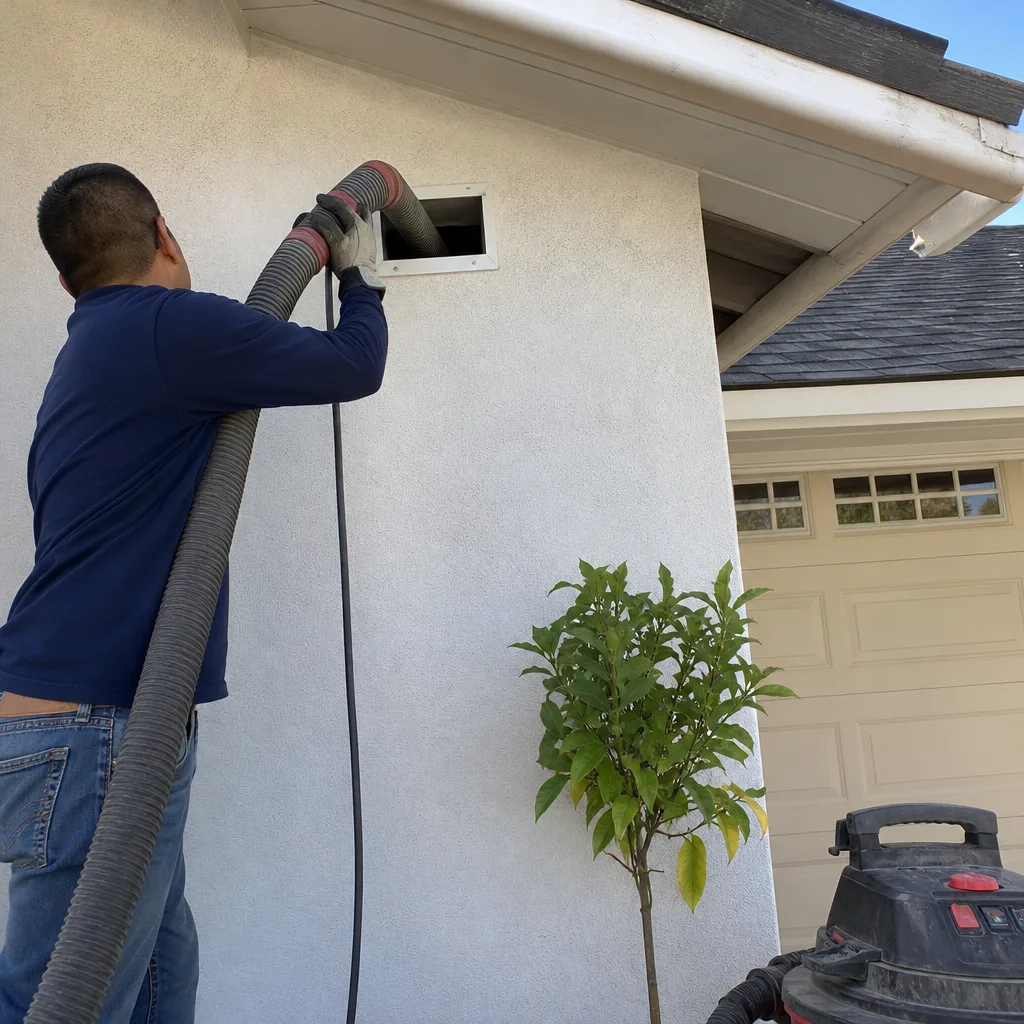
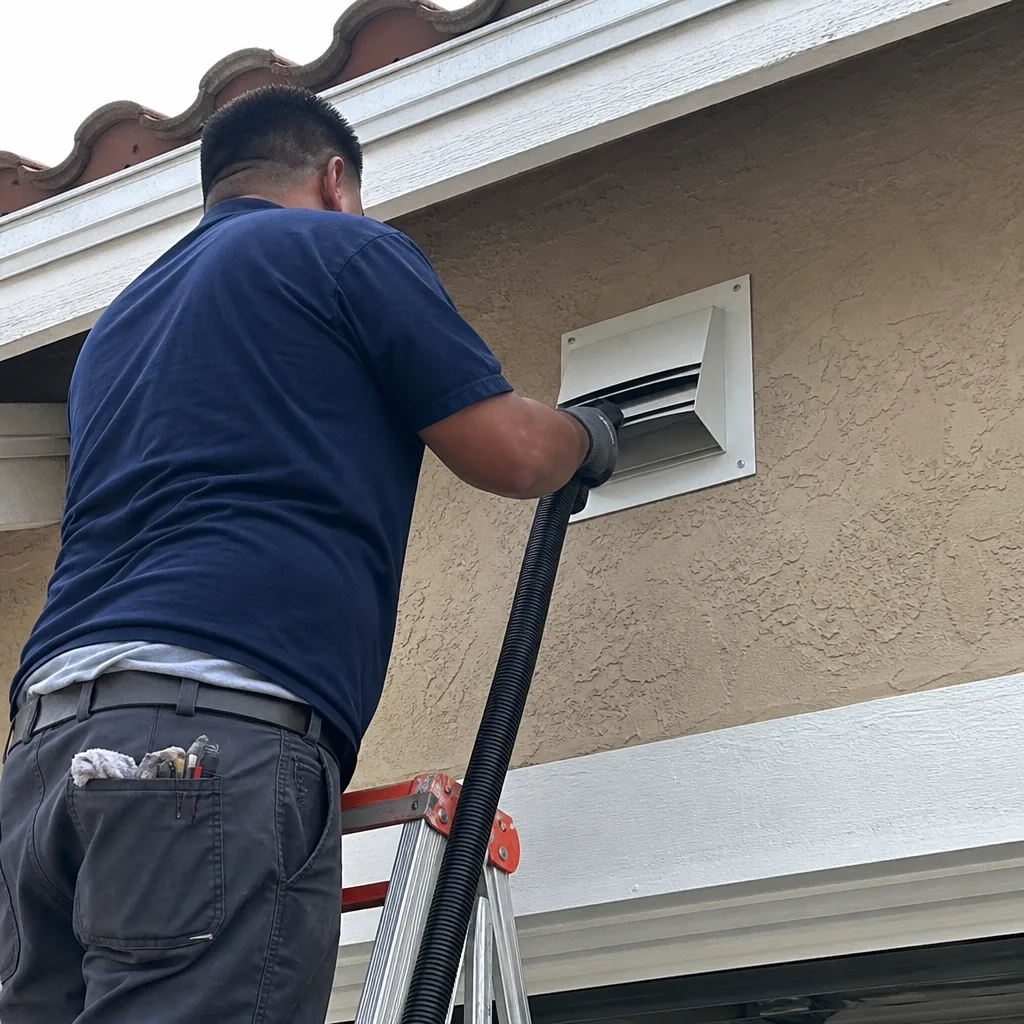
- Ignoring the dryer vent while focusing on AC ducts. Dryer vent lint accumulation is a leading cause of house fires and a separate system entirely. Dryer vent cleaning in Mira Mesa is a distinct service for good reason: it requires different tools, different access, and different safety considerations than HVAC duct cleaning.
- Repeatedly cleaning vents without addressing the underlying duct condition. If you find yourself vacuuming visible dust from the same registers every few weeks, the duct interior is the source. Cleaning the register repeatedly treats the symptom, not the source. In some cases, older Mira Mesa ductwork may need repair rather than repeated cleaning. Air duct repair as a standalone service addresses damaged or disconnected duct sections that repeated cleaning cannot fix.
When to Call a Professional
Professional duct cleaning is the right call when visible dust returns quickly after cleaning, when airflow from specific rooms is noticeably weaker than others, when musty odor persists during HVAC operation, or when you have evidence of pest activity in the ductwork. These conditions indicate material accumulation beyond the reach of any consumer equipment. If you have already attempted a DIY cleaning and found the results unsatisfactory, the camera will show you exactly what the DIY pass missed. Air Duct Cleaning Mira Mesa offers free estimates for Mira Mesa homeowners. Call (833) 734-7428 to schedule an assessment, and we will show you the current condition of your ducts before recommending any work.
Frequently Asked Questions
DIY duct cleaning effectively addresses register covers, accessible duct openings, and filter replacement, but it cannot clean the majority of your duct system because consumer vacuums cannot generate the negative pressure required for full-run extraction. The areas you can reach and clean get clean; the areas you cannot reach remain untouched.
Most Mira Mesa homes benefit from professional duct cleaning every 3 to 5 years, with the interval varying based on filter discipline, pet load, renovation history, and whether the home has experienced pest activity. Homes with frequent filter changes and diligent register maintenance can extend toward the longer end; homes with pets and heavy system use often need cleaning closer to the 3-year mark.
DIY kits are priced for what they are: register maintenance tools with limited reach. They are not priced for full-system cleaning because they cannot perform full-system cleaning. The cost difference between a $40 brush kit and professional service reflects the difference between cleaning the first few feet of duct and cleaning the entire duct network.
Extended hoses do not solve the CFM problem. A shop vacuum still moves 100 to 150 CFM regardless of hose length, and airflow actually decreases as hose length increases. The issue is not reach; it is air-moving capacity. Professional cleaning equipment moves 2,000 to 4,000 CFM, which is the difference between local airflow and system-wide extraction.
Professional duct cleaning uses negative air machines capable of moving 2,000 to 4,000 CFM, agitation tools from manufacturers like Rotobrush and Nikro, camera inspection for before-and-after verification, and containment equipment such as Abatement Technologies filtration systems. This equipment combination enables full-system depressurization and source removal, which no consumer-grade setup can replicate.
Mira Mesa’s dry, dusty climate and heavy seasonal HVAC use mean systems here cycle substantial air volume and can accumulate particulate more quickly than homes in milder or more humid climates. The dust load from Mira Mesa’s arid conditions, combined with summer air conditioning cycles, makes regular filter maintenance and periodic full-system cleaning particularly valuable for local homeowners.
For answers about your specific system, call (833) 734-7428. We will assess your duct condition and give you an honest recommendation, whether that means cleaning, repair, or simple filter guidance.
The Bottom Line
DIY duct cleaning in Mira Mesa is not wasted effort. Register maintenance, filter discipline, and regular observation genuinely improve system performance and extend time between professional cleanings. What DIY cannot do is clean the full duct network, because no consumer equipment generates the negative pressure required for source removal across a complete duct system. When you understand that boundary, the decision frame shifts: DIY is maintenance, professional is cleaning, and both have a legitimate place in your home care routine. For Mira Mesa homeowners ready for full-system cleaning with camera verification, Air Duct Cleaning Mira Mesa offers free estimates at (833) 734-7428.
Written by the team at Air Duct Cleaning Mira Mesa, serving Mira Mesa since 2011. Explore more guides & resources from our team.
See the difference
 Before
 After
 Before
 After
 Before
 After